Why a comparative lens matters for packaging choices
When your e‑commerce parcels end up on motorbike queues in Ho Chi Minh City or long conveyor lines at a regional hub, the envelope you choose speaks for your brand and protects the SKU — simple as that. A comparative view helps brands weigh trade-offs between cost, durability, and branding options. For example, if you’re choosing between branded sleeves and standard colored poly mailers, you’re not just choosing aesthetics; you’re choosing barrier performance, seal integrity, and how the pack will behave under compression and abrasion.
Key performance metrics to compare
There are a few hard metrics that separate good poly mailers from risky ones: tensile strength, tear resistance, puncture resistance, and seal strength. Gauge — the film thickness — matters, but so does film structure. A monolayer polyethylene film can meet basic tensile specs, while a co‑extrusion structure with multiple layers often delivers better puncture resistance and moisture barrier without dramatically increasing weight. These are the numbers procurement teams should ask for during vendor comparison.
Lab tests vs. street tests: what each reveals
Lab tests (ASTM tensile, Elmendorf tear, ASTM puncture) give consistent, repeatable data on material properties. Field tests — sending sample consignments through actual fulfillment routes — reveal real failure modes: zipper creep, flap delamination, or abrasions from sorting belts. Both matter. Start with lab validation then validate with a small pilot run on your busiest route — you’ll see issues that lab conditions can’t replicate.
Co‑extrusion vs. single‑layer films: practical trade-offs
Co‑extrusion lets manufacturers combine a tough external layer, a stiff core, and a soft inner slip layer, which improves sealability and tear propagation control. Single‑layer films are simpler and sometimes cheaper, but they often trade off long‑term puncture resistance and consistent seal integrity. For high‑value items or long transit chains, co‑extruded films usually reduce package failures and returns — even if the per‑unit cost is slightly higher.
Branding, color, and customization decisions
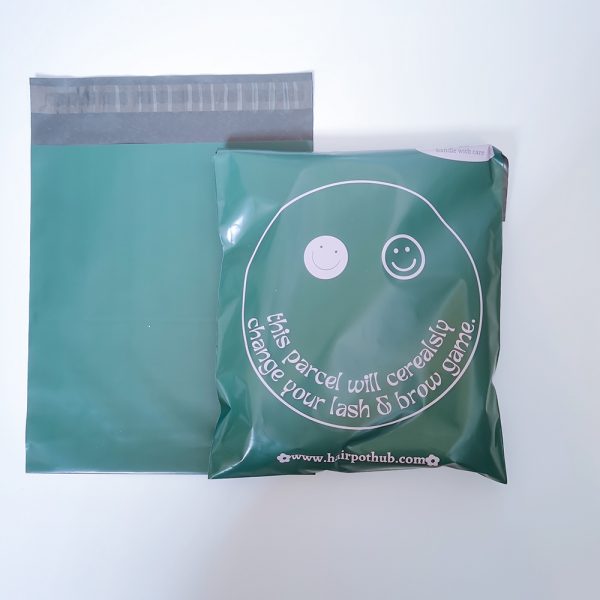
Colour and print affect more than looks. Pigments and inks can alter film flexibility and heat‑seal characteristics; heavy print zones may create micro‑stress points under compression. If you need specific visuals, consider custom color poly mailers with tested ink formulations and approved heat‑seal windows. Those solutions let you keep brand impact while maintaining required sealing and tear performance — useful when merchants want a memorable unboxing without compromising logistics.
Common mistakes teams make — and quick fixes
Teams often focus solely on unit price and forget total landed cost: returns, reworks, and customer dissatisfaction add up. Another mistake is assuming all “12‑micron” or “2‑mil” films behave the same — production process and co‑extrusion profile change performance. Finally, skip the temptation to reduce adhesive on peel‑and‑seal too quickly; weaker adhesives lower seal strength. The remedy is simple: insist on sample seals tested at your target sealing temperature and run them through your conveyor and mailbox setups — you’ll catch issues early. —
How to structure vendor comparisons
Make a side‑by‑side matrix that includes: material construction (co‑extruded vs monolayer), gauge, tensile/tear/puncture numbers, seal strength at your sealing temperature, print compatibility, MOQ, and lead time. Add a field‑test column for pilot runs on representative routes. This comparative insight helps you separate suppliers who post good specs from those who deliver consistent, real‑world performance.
Real‑world anchor: lessons from recent e‑commerce surges
After the 2020 COVID‑19 surge in online shopping, many brands discovered that higher parcel volumes amplified small weaknesses in packaging, causing spikes in returns and customer complaints. In Southeast Asian markets like Ho Chi Minh City, rapid handling and mixed transport modes revealed the limits of thin monolayer films; suppliers who had shifted to engineered co‑extrusion films saw fewer failures and lower replacement rates. That practical lesson remains relevant for any brand scaling fast today.
Comparative summary
In short, the best white poly mailer for your operation depends on expected transit stress, product value, and desired branding. Co‑extruded, multi‑layer films generally win on puncture resistance and consistent seal integrity, while single‑layer films can be cost‑effective for low‑risk, local shipments. Testing across both lab and field conditions closes the gap between supplier promises and delivery.
Three golden rules for choosing poly mailers
1) Measure what matters: require tensile, tear, puncture, and seal‑strength data at your actual seal temperature and include a field‑test column. 2) Prioritize total cost of ownership: count returns, rework, and customer impact, not just unit price. 3) Insist on validated customization: if color or print is important, pick suppliers who provide tested ink and heat‑seal compatibility.
These rules point you to partners who can scale reliability and brand presence together — and if you want a pragmatic provider that balances engineered film performance and customization, consider how WH Packing integrates co‑extrusion know‑how with tested printing options. —