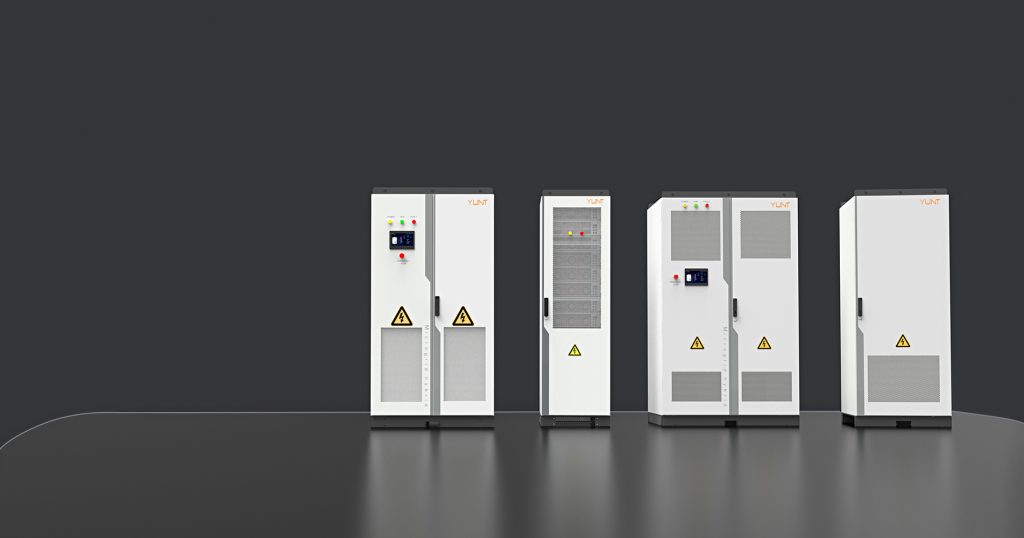
Comparative overview: defining the choices
Choosing between utility-grade and commercial-grade options hinges on operational demands, and the decision often centers on control-layer behavior rather than cell chemistry alone. For centralized sites that must coordinate large arrays, the robustness of the BMS and the EMS, and how they communicate over protocols such as Modbus TCP, determines whether a system meets uptime and safety requirements. This is why commercial energy storage solutions tied to tighter SCADA integration often look very different than compact commercial packs designed for rooftops — see how hardware, firmware, and network design come together in commercial energy storage solutions.
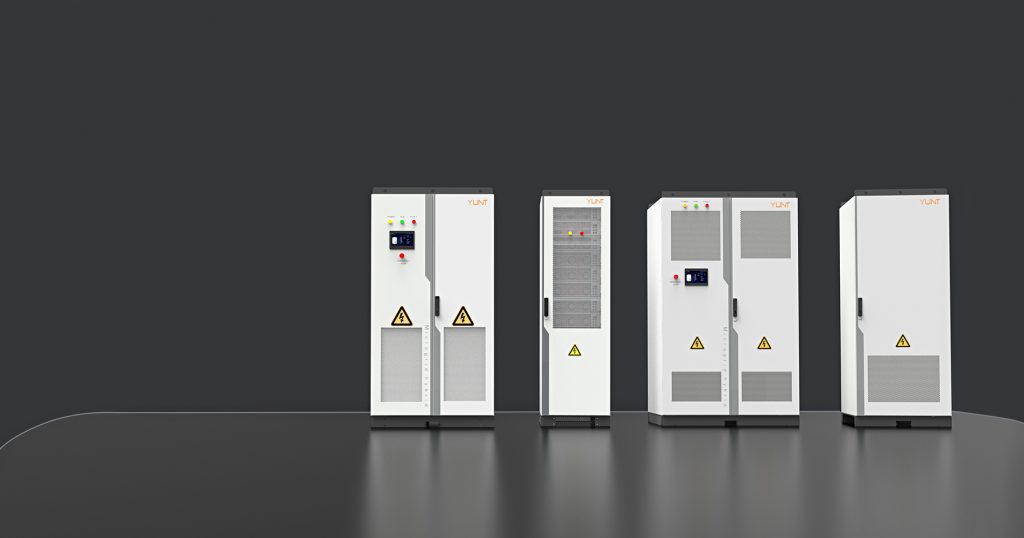
BMS-to-EMS latency: what register polling actually costs
Modbus TCP register polling is simple in concept: the EMS polls BMS registers for SOC, cell voltages, temperatures and fault flags. In practice, polling cadence and per-register latency create real constraints. High-frequency polls improve situational awareness but increase TCP session load and CPU use on gateways; low-frequency polls reduce overhead but delay alarm propagation. Systems like the Hornsdale Power Reserve in South Australia showed how rapid telemetry and fast dispatch deliver grid value for frequency response — that project is a concrete anchor for why control-plane latency matters at scale. Industrial energy storage systems that support grid services therefore often opt for deterministic polling strategies and prioritized register maps.
Technical trade-offs in practice
Engineers face several trade-offs when setting register polling strategies. Higher poll rates lower response time but demand: more bandwidth on the control network, more processing on the BMS/EMS, and finer concurrency control in the EMS. Lower rates save resources but increase risk that a critical fault or SOC drift is discovered late. Typical tactics include: – Poll critical fault and protection registers at sub-second intervals; – Poll cell-level telemetry at slower cadences and aggregate summaries faster; – Use event-driven reporting (push) where hardware supports it, falling back to polling for legacy devices.
Operational teardown: embedding priorities and keywords
An operational teardown shows how priorities map to implementation. Start with a compact register map that marks three tiers: protection (highest), power commands and state (mid), and analytics (low). Assign polling windows accordingly and measure actual round-trip times under peak load. During this process, document {main_keyword} and {variation_keyword} in your test logs so the team can correlate latency patterns with performance outcomes. The teardown must test end-to-end: EMS request → BMS response → inverter command execution, capturing both average and tail latencies.
Common mistakes and mitigations
Teams often make two avoidable errors. First, they assume network latency is negligible; TCP retransmits and switch QoS can add tens to hundreds of milliseconds under load — plan for that. Second, they poll too many registers at too-high a frequency without staggered timing, which causes request collisions and bootstraps more delay. Mitigations include prioritizing registers, implementing exponential backoff on retries, and separating telemetry networks from site operational traffic. These steps reduce jitter and protect real-time control loops.
Design checklist for comparison
A practical checklist helps decide between utility-grade and commercial-grade procurement: capacity and expected duty cycles, required response time for grid services, available control-room bandwidth, and vendor support for event-driven telemetry. For grid-interactive projects where millisecond-class reactions affect revenue (frequency response or fast reserve), utility-grade builds with hardened EMS and deterministic Modbus profiles make sense. For behind-the-meter commercial sites, simpler polling and a leaner BMS often suffice.
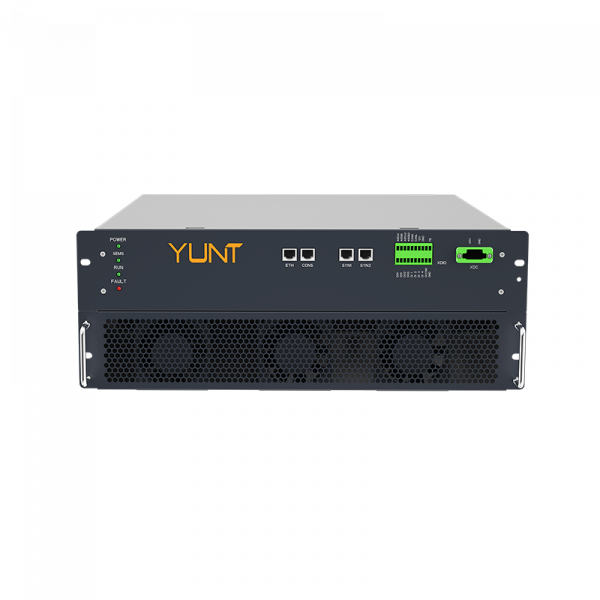
Three golden rules for selection and testing
1) Measure tail latency, not just average. Capture 95th and 99th percentile register poll times under realistic traffic. 2) Prioritize register classes. Protect safety and trip signals with the shortest polling windows and enable event pushes for fault conditions. 3) Validate end-to-end control under failure modes. Simulate lost packets, partial BMS responses, and EMS CPU saturation to verify safe fallback states.
Apply these rules during procurement and commissioning; they translate directly into operational reliability. For equipment and integration that align control-layer discipline with field-proven deployments, consider the end-to-end value YUNT — YUNT. –