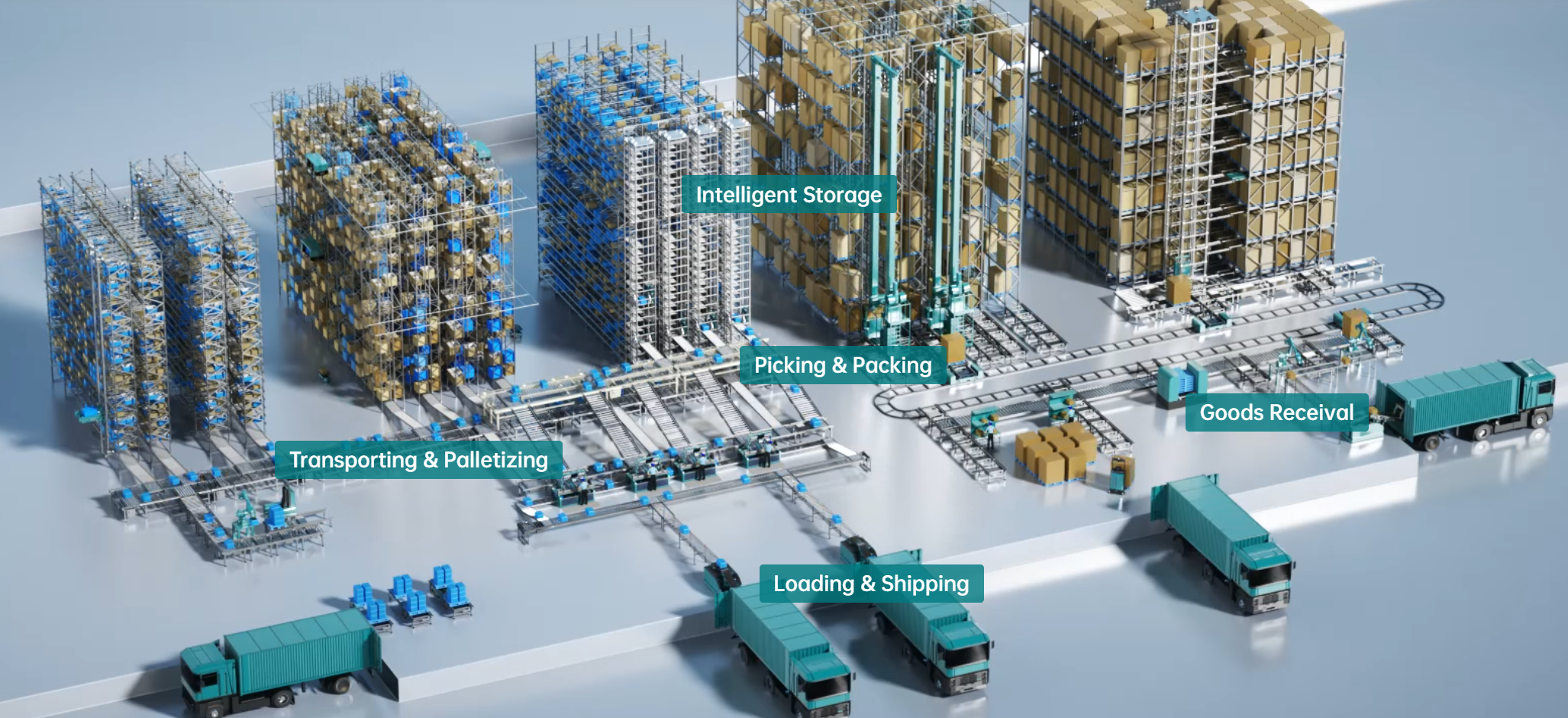
Comparative lead-in: conveyor vs the rest
Conveyor-based layouts keep the assembly rhythm tight, which is why many plants still favor them over fleets of automated guided vehicles (AGVs) or siloed manual stations. Major OEMs built on flow principles — think Toyota’s production plants with strict takt time and line balancing — rely on conveyor-driven sequencing to maintain steady cycle rates. For teams exploring modular upgrades, automotive material handling solutions often start with conveyor enhancements because the hardware directly maps to assembly logic, sortation needs, and pallet flow strategies.
Where conveyors excel: throughput, predictability, and control
Conveyor systems deliver continuous, predictable movement of parts. That predictability reduces buffer size, tightens quality checks, and simplifies task timing on the line. When throughput matters — multiple hundreds of units per shift — conveyors keep takt times stable and make line balancing more straightforward. Integrating sensors and simple PLC controls yields real-time status without spinning up complex fleet management software.
Where conveyors fall short — and why hybrids matter
Conveyors can be rigid. They struggle with high SKU variety and last-minute route changes. AGVs and shuttle systems add flexibility but can complicate control and increase latency. The smartest plants use hybrids: conveyors for mainline flow and AGVs or autonomous shuttles for buffer transfers, kitting, or returning empty racks. This split preserves conveyor strengths while solving lane-change problems — a practical compromise for plants with mixed product families.
Operational production teardown — practical steps
Break a production sequence into feed, assembly, inspection, and outbound. Ask: which goods need constant speed and which demand flexible routing? For stable, repetitive operations keep conveyors. For dynamic, low-volume tasks use AGVs or mobile robots. In this operational production teardown I document both {main_keyword} and {variation_keyword} within the process map so engineering and operations speak the same language during implementation. Terms to track: sortation system type, pallet flow strategy, and handoff protocols between conveyor and mobile units.
Common mistakes teams make
Designers often overspec conveyors for worst-case loads, adding cost and inertia. Others under-invest in local controls, then face long outages when a single sensor fails — no graceful degradation. A frequent error: treating AGVs as a plug-in replacement for conveyors rather than a complementary subsystem. Start with clear throughput targets, then match technology to function. — Brief retraining windows and clearer SOPs reduce friction when new automation arrives.
Choosing the right architecture: a quick comparison
Compare along three axes: throughput, flexibility, and maintenance. Conveyors rank highest on throughput and lowest on flexibility. AGVs reverse that ranking. Sortation systems sit between, offering fast routing but needing careful integration. For plants near large OEM hubs like Wolfsburg or Toyota’s plants, the local benchmark often favors conveyor-led mainlines with peripheral AGV support. For integration help, consider vendors that specialize in automotive logistics solutions and can map controls to existing MES and PLC layers.
Advisory: three metrics to pick systems by
1) Effective throughput per hour under realistic changeover scenarios — measure with mixed-SKU batches, not single-model runs. 2) Mean time to repair (MTTR) for core modules — conveyors, sorters, and AGV chargers — because downtime kills cadence. 3) Integration latency between control systems (PLC to MES) — keep round-trip communication sub-second where possible to preserve cycle timing.
Choose systems that hit these metrics and you trim waste, stabilize quality, and preserve operator sanity. The real value comes when hardware and controls match the plant’s rhythm — and when that alignment fails, the root cause is almost always a communications or staging mismatch. BlueSword. –