Introduction — A Question of Precision, Cost, and Time
Who pays the price when a delicate neural target is miss-aligned by a fraction of a millimetre?
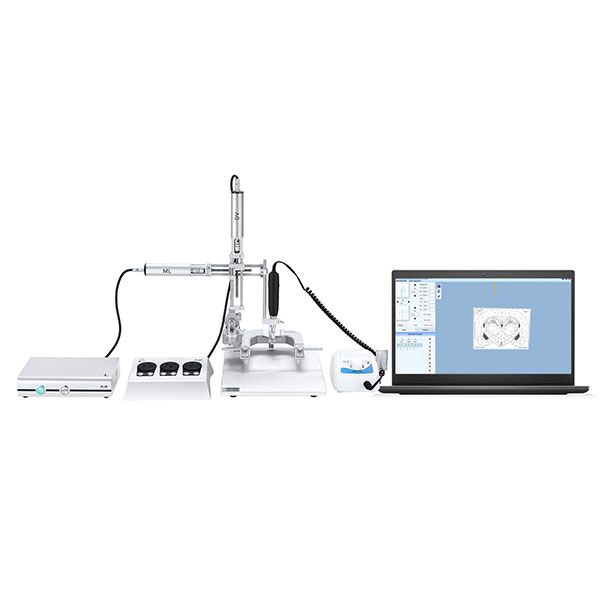
In many labs across the region and beyond, we face ever-growing throughput demands while budgets tighten; the automated stereotaxic Instrument sits at the centre of that tension. Recent surveys show procedural times cut by up to 40% with automation, yet reproducibility issues persist (local workflows complicate matters) — so what exactly blocks routine, reliable outcomes? I ask this as someone who has stood beside surgeons and bench scientists watching a micropositioner drift by microns during a long run.
This introduction sets the scene with a simple fact: automation promises speed and repeatability, but the reality is more nuanced. In the next section I will dig beneath surface claims and show where equipment design and user workflow misalign — and why that matters for your projects.
Deeper Layer: Where Digital Stereotaxic Instrumentation Falters
digital stereotaxic instrument systems look elegant on spec sheets, yet I still see recurring weaknesses when they move from catalogue to clinic or lab bench. Technical rhythm here — let us look under the hood. The stereotaxic frame and robotic actuator deliver gross motion well, but micro-adjustments rely on a fragile chain: imprecise fiducial markers, thermal drift in stepper motors, and the occasional backlash in lead screws. These are not abstract problems; they are practical pain points that waste time and compromise data integrity.
(Look, it’s simpler than you think.) One common flaw is over-reliance on a single positioning loop. The control system commands movement; the micropositioner responds; the user assumes the target was hit. But without closed-loop feedback — with high-resolution encoders or imaging confirmation — errors accumulate. Edge computing nodes or local processing can help by fusing sensor data in real time, yet many systems still ship with minimal onboard correction. I’ve watched teams recalibrate mid-experiment because temperature shifts and power converters altered alignment — frustrating, avoidable, and costly.
What exactly breaks in daily use?
Calibration fragility, insufficient feedback, and awkward user interfaces top the list. They sneak up slowly — then suddenly a whole day’s data is questionable.
Moving Forward: Principles for Next-Gen Digital Stereotaxic Instruments
Now let us turn to principles that should guide future designs. I will outline practical, technology-led approaches rather than lofty promises. First, integrate multi-sensor feedback: combine encoders, imaging (when possible), and inertial readouts so the control loop knows where the probe truly is. Second, design modular control electronics that allow firmware updates and diagnostics; this reduces downtime and adapts devices to new protocols. Third, prioritise human-centred interfaces — short menus, clear prompts, and fail-safe routines that reduce cognitive load for operators.
digital stereotaxic instrument platforms that embrace these principles will be more robust in real settings. For example, combining a high-resolution encoder with an optical fiducial check can spot sub-micron drift before an injection. This is not science fiction — it’s engineering discipline, and it yields reproducible outcomes. — funny how that works, right?
What’s Next — Practical Metrics for Evaluation?
When you evaluate options, I recommend focusing on three clear metrics. First, closed-loop accuracy: how well does the system confirm its final position? Look for systems that report real-time encoder or imaging verification. Second, operational resilience: can the device tolerate temperature swings, intermittent power, and long runs without recalibration? Third, user recovery modes: how easily can a technician recover from a failed move or interrupted run? These metrics map directly to fewer failed experiments and lower total cost of ownership.
To conclude with an advisory note: assess instruments by their real-world behaviour, not just their peak specs. I advise teams to run a short validation protocol on arrival — we do this in-house, and it saves headaches later — and to insist on modular electronics and accessible diagnostics. For practical solutions and further details, consider vendors who publish validation data and support iterative upgrades; they make long-term lab life easier. For trusted options and support, see BPLabLine.