Putting you first: why these specs matter
What do you, the homeowner or installer, actually get when a manufacturer talks about blade pitch and motor efficiency? The short answer: comfort, energy use, and longevity. If you spend evenings on a screened porch or under a pergola, choosing the right outdoor patio ceiling fans changes how often you reach for the thermostat and whether a salty sea breeze will corrode the finish in two summers. This guide centers on practical decisions—how blade pitch interacts with motor design, what that means for airflow and noise, and how a low-profile design with integrated light should perform in real conditions.

Blade pitch: the geometry that moves the air
Blade pitch is the angle of the blade relative to the plane of rotation. A steeper pitch usually produces more airflow per revolution—measured as CFM—yet demands more torque from the motor. So the trade-off is obvious: maximize airflow and you may increase motor load; reduce pitch and you might need higher RPM to compensate. For low-profile fans the constraint is tighter because blades are closer to the ceiling, which affects airflow patterns. The practical question becomes: does the manufacturer balance pitch and blade length to maintain efficient CFM without overstressing the motor?
Motor efficiency: beyond watts and promises
Motor efficiency is not just the label on the spec sheet; it’s how much of the electrical input turns into useful airflow. Brushless DC motors (BLDC) typically offer better efficiency, quieter operation, and finer speed control than older AC motors. That efficiency matters in two ways: steady-state energy consumption and how the motor handles higher blade pitch during startup and sustained use. For an outdoor flush mount fitted with a light, thermal performance also matters—heat management affects both LED longevity and motor reliability. Ask for torque curves or at least the motor type and expected wattage at typical speeds.
Low-profile design constraints and lighting integration
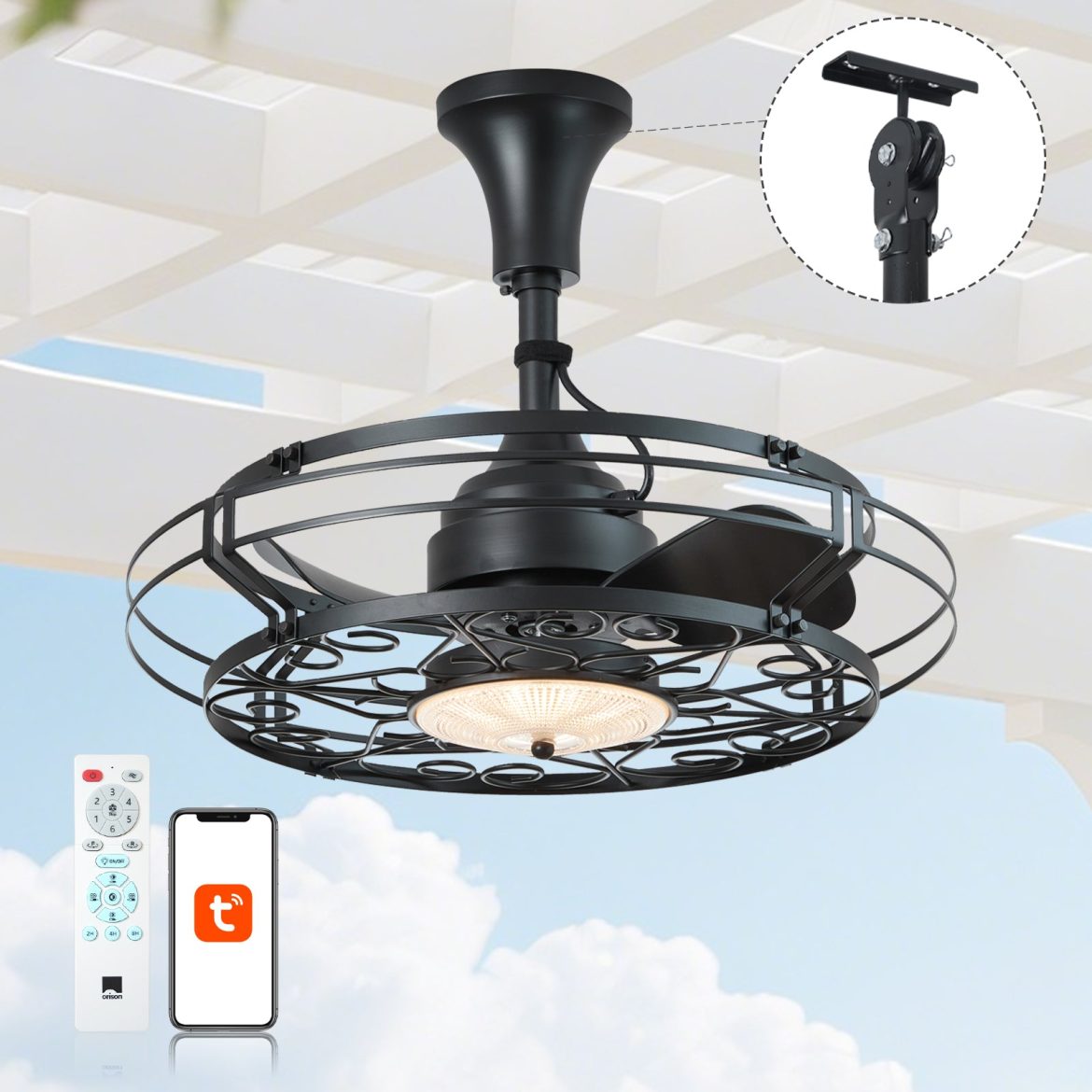
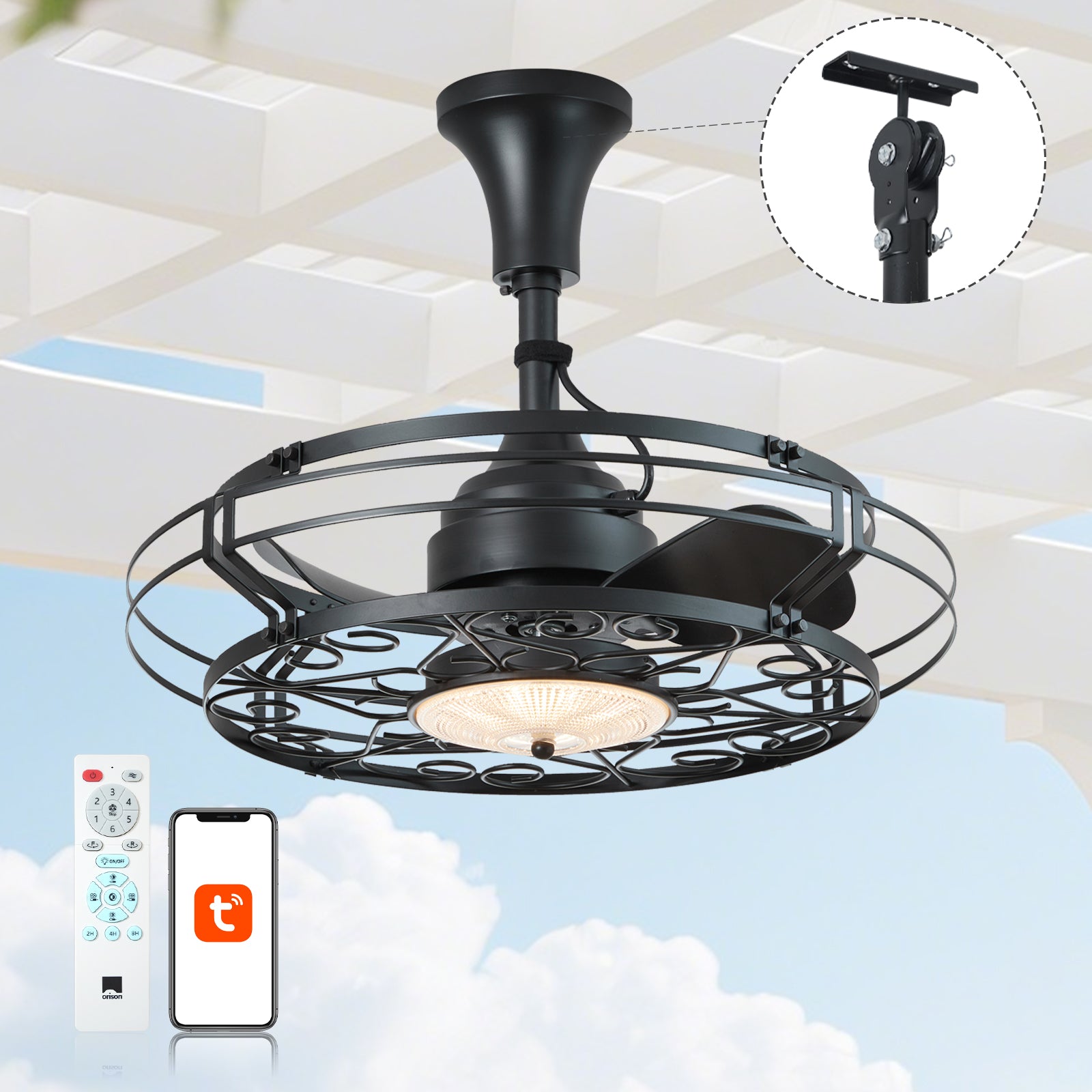
Low-profile—or flush mount—fans are increasingly popular where headroom is limited. But embedding a light fixture in a low-profile housing introduces thermal and aerodynamic compromises. The enclosure can trap heat from LEDs and slightly disrupt airflow around the motor housing, which may change efficiency figures versus a remote-mount design. If you’re choosing a flush mount outdoor ceiling fan with light, verify IP rating for damp or wet locations and confirm that the integrated light is rated for outdoor heat cycles.
Real-world anchor: coastal installation lessons
From installing fans on a contractor job in the Florida Gulf Coast to advising homeowners in Tampa, I’ve seen specification gaps create failures: coastal salt will eat exposed fasteners and non-waterproof motors faster than you’d expect. That’s why coastal or hurricane-prone regions demand higher IP and corrosion-resistant finishes. Beyond materials, placement matters—mounting a low-profile fan under a tightly enclosed porch without adequate ventilation raised motor temperatures and shortened LED life in one project—so site-specific conditions always influence choices.
Common mistakes users make — and how to avoid them
People often pick by appearance rather than function. Typical missteps include: choosing an overly steep blade pitch without checking motor torque (which causes strain), neglecting to confirm light thermal dissipation for enclosed fixtures, and overlooking local environmental risk like salt spray. A practical corrective: test a sample model in situ or insist on performance data at installer-relevant angles and heights—don’t just trust peak CFM numbers recorded in a lab.
Comparing trade-offs: what to prioritize
So how should you prioritize? Start with location and use-case. For a shaded, open-air patio in a humid coastal area, prioritize IP rating, corrosion resistance, and a motor type known for torque at low speeds. For urban balconies where headroom and noise matter, favor low-profile BLDC motors with balanced blade pitch and quality bearings. Cost matters, but factor in lifecycle—energy use, maintenance, and LED replacement—rather than only upfront price.
Quick checklist before you buy or install
Use this practical checklist when evaluating models:
- Motor type: BLDC vs. AC and expected wattage at typical speeds.
- Blade pitch and diameter: estimated CFM and startup torque needs.
- Environmental rating: IP and finish for coastal or humid locations.
- Light integration: LED thermal management and replaceability.
- Clearance and mounting: confirm low-profile dimensions suit the space.
Alternatives worth considering
If a low-profile fan with an integrated light looks limiting, consider separate solutions: a slightly lower-profile fan paired with a canopy light or recessed outdoor-rated lighting. That approach separates thermal loads and often increases motor life. Or adopt variable-speed controls and occupancy sensors to match real-world usage patterns—simple automation reduces running hours and improves perceived comfort without oversized motors. —
Three golden rules (advisory close)
1) Match blade pitch to motor torque: demand specs or curves that show motor power at typical operating RPMs. 2) Prioritize environmental ratings: IP and corrosion finishes beat short-term savings in coastal or high-humidity settings. 3) Verify integrated-light thermal design: enclosed LEDs must have heat dissipation paths or risk shortened lifespan.
In practice, the right low-profile outdoor fan balances nuanced engineering with everyday conditions—precisely the kind of practical integration Orison aims to simplify for homeowners and installers alike. —