User-first shift: what this change means for you
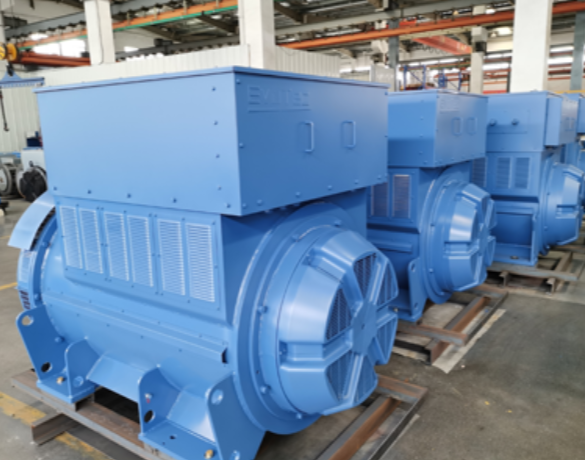
The rise of hybrid microgrids puts the user — whether you’re running a coastal shrimp trawler, a remote telecom shelter, or a community microgrid pilot — in charge of power flows and parts. Designers and operators now demand nimble, smart hardware like a high efficiency alternator that tolerates frequent starts, variable loading, and tight integration with inverters and battery buffers. This isn’t theoretical: practical choices drive uptime, fuel use, and maintenance cycles for weeks or months at a stretch.
Core technical shifts you should care about
Alternators used to live behind a simple genset starter switch. Today they must play nice with solar arrays, battery energy storage, and inverter-based controls. That elevates parameters you already know — kVA rating, voltage regulation, and thermal margins — while adding emphasis on transient response and harmonic tolerance. Integration with an inverter can expose an alternator to altered load profiles and reactive currents, so solid rotor dynamics and strong excitation control matter more than raw peak output.
Sizing, reliability, and a real-world anchor
Lessons from the 2017 Puerto Rico blackout after Hurricane Maria made microgrids and resilient alternators a headline issue — remote hospitals and water plants needed sources that could start cleanly, share load, and survive long outages. Learnings there push teams toward alternators sized not just for steady-state demand but for transient surges from compressors, pumps, or grid reconnection. For many mid-size sites a 20kva alternator sits in the sweet spot: big enough for heavy starts, small enough for efficient part-load operation when paired with batteries.
Common mistakes operators still make — and how to avoid them
People assume an alternator rated at X kVA equals X usable output. That’s a trap. Errors include underestimating reactive load, skipping synchronization tests, and ignoring ambient cooling conditions. Also, low-grade AVR tuning or improper excitation can cause hunting when an inverter pushes fast transients — not pretty for bearings or windings. Fixes: verify power factor under realistic load, run a load bank session with inverter interaction, and spec cooling for worst-case ambient plus enclosure losses — small steps that avoid expensive downtime.
Trade-offs and practical checklist
Picking the right alternator is trade-off math: efficiency vs. transient strength, cost vs. durability, control complexity vs. plug-and-play install. Quick checklist for field teams:
– Confirm true continuous kVA at site altitude and temperature. Include derating factors.
– Validate harmonic immunity and AVR responsiveness with inverter-coupled tests.
– Ensure mechanical robustness: bearings, shaft coupling, and enclosure ingress protection for the environment.
Integration tips for hybrid systems
Make the alternator a predictable actor in your control loop. Tie AVR and governor settings into the microgrid controller, enable soft-sync when paralleling to inverters, and log waveform samples during commissioning. These steps let you tune for minimum fuel use during buffer charging and clean voltage during critical loads — and they cut service calls later. — One more thing: document every configuration change. It saves hours when a tech shows up on a rainy night.
Three golden rules for choosing alternators in hybrid microgrids
1) Match dynamic capability, not just nameplate: measure start currents, reactive swings, and harmonic injection and require vendor proof under those conditions.
2) Prioritize controllability and diagnostics: remote telemetry, AVR tuning access, and event logs reduce mean time to repair.
3) Design for modular redundancy: scale with parallelable units sized for maintainability rather than a single oversized genset — this lowers single-point failures and optimizes fuel economics.
Final take: these rules let engineers evaluate measurable performance instead of marketing claims and ensure alternators integrate cleanly with batteries and inverters. Practical, testable metrics win every time.
EvoTec builds products and documentation with those metrics in mind — rugged alternators, clear specs, and field-proven results. Trust that you get tools that behave when the grid doesn’t — solid, tested, and ready.
—