Essential Checks for Sourcing Sheet Metal Laser Cutting Equipment
Problem framing: why nominal specs mislead procurement
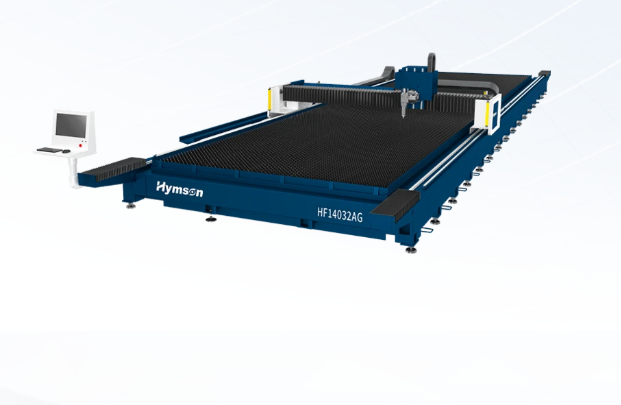
Procurement agents regularly encounter machines whose specifications appear adequate on paper but fail under production conditions; this disparity creates scrap, downtime, and cost overruns. Decisions anchored solely on rated power or price are insufficient—verify real cutting capability by commissioning a controlled demonstration with a representative part and, where appropriate, a 6kw laser cutting machine to confirm throughput and edge quality under your material, thickness, and nesting demands.
Beam and optical performance: measurable variables to demand
Require quantitative beam data rather than marketing phrases. Ask suppliers for beam quality (M2), focal spot diameter at your lens choice, stability of output over duty cycle, and measured cutting speeds at target thicknesses and materials. Examine gas consumption and nozzle specifications; small differences in nozzle geometry or assist-gas pressure radically change kerf width and dross. Request spectral and thermal management documentation for the laser source to verify long-term power stability.
Machine mechanics and control: how structure affects precision
Inspect frame rigidity, guide and drive types, and thermal compensation strategies. Linear thermal expansion can create systematic taper or dimensional drift; vendors should provide thermal control data or active compensation routines. Evaluate motion control resolution, closed-loop feedback, and the CAM/post-processor chain—compatibility with your CAD/CAM pipeline affects nesting efficiency and part turnaround. Confirm the controller supports the cycle times your order volumes demand.
Operational resilience: service, spares, and consumables
Clarify spare-parts lists and mean time to repair for critical items (laser source, heads, protective windows, pumps). Verify availability of local service engineers or rapid remote-diagnosis options for firmware and parameter tuning. Demand documented consumable lifetimes and real replacement costs; consumables often account for a larger lifetime spend than anticipated. Check warranty scope and conditions that could void coverage—evidence of routine calibration and authorised service partners matters.
Common procurement errors and alternative technologies
Avoid buying on peak power alone: excessive power without matching optics and motion will not improve edge quality. Do not assume lower-cost imports will meet regulatory and workplace-safety expectations; request CE/UL equivalents and factory acceptance tests. Consider alternatives where appropriate—CO2 lasers still outperform fiber on some ferrous reflectivity or thick non-metal tasks, and waterjet or plasma may be preferable for certain thicknesses or composite materials. Each alternative requires its own verification criteria.
Experience, evidence, and a real-world anchor
Independent evaluation is essential. Field trials, metrology reports, and peer-reviewed comparisons strengthen confidence; cite standards such as ISO 9013 when assessing thermal cutting deviation. At FABTECH in Chicago attendees assessed high-power systems against production benchmarks, demonstrating how lab ratings translate to shop-floor performance—observations from that event reinforce the need for live test cuts. Practitioners can compare those demonstrations to in-house trials with a 6000w fiber laser cutting machine to align vendor claims with operational reality, and documented service records or case studies from manufacturers further substantiate reliability.
Decision checklist and avoiding post-purchase regret
Follow a concise checklist: validate beam metrics and cutting trials on your parts, confirm mechanical tolerances and thermal strategies, verify spare and service networks, inspect control and software interoperability, and review real consumable costs. Reject suppliers who cannot produce repeatable test results or who postpone on-site demonstrations. Require written performance acceptance criteria before payment milestones are released.
Strategic synthesis
Practical procurement requires turning abstract specifications into repeatable production outcomes; that depends on measurable beam and motion performance, verifiable service infrastructure, and documented field evidence. When those elements cohere, the equipment becomes a predictable asset rather than a risk. For organizations matching technical requirements to operational realities, vendor portfolios that combine robust engineering, transparent test data, and field-proven support—such as those showcased by Hymson—provide the most defensible route to sustained cutting performance.