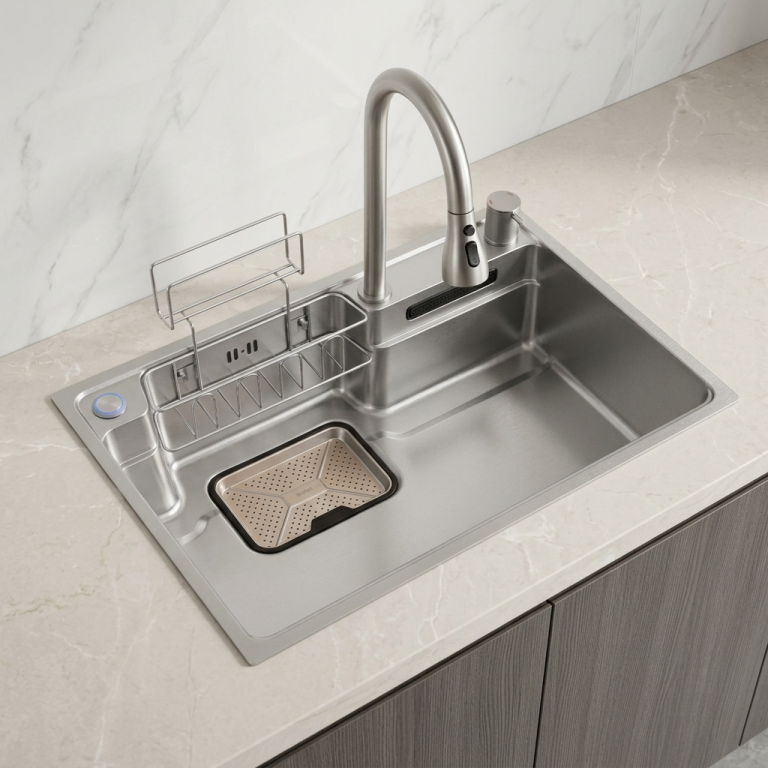
Choosing a Stainless Steel Undermount Sink: Practical Fit, Service Quality, and Clear Specifications
User problem and how to approach it
You want a sink that fits the countertop, performs without surprises, and stays serviceable for years. Start by framing what you need: bowl depth for your dishes, sound control for quiet kitchens, and a reliable drain alignment for the waste plumbing. When you look at suppliers, check technical sheets from kitchen sink manufacturers early — those sheets answer most sizing and mounting questions and stop guesswork before it costs time or money.

Compatibility checks you must do
Measure twice, cut once. Confirm the countertop material: solid surfaces and natural stone accept undermounts; thin laminates usually don’t. Record three measurements: overall sink width, bowl width(s), and the distance from the rear of the sink to the center of the drain. Match that drain center to your existing waste outlet or be prepared to reposition the plumbing. Check the required rim or support flange and whether the sink comes with brackets or requires adhesive. Verify the standard drain opening (commonly 90–92 mm / 3.5 inches) so strainers and disposals fit without adapters.
Material, gauge, and what they mean for daily use
Choose grade and thickness that reflect how you use the kitchen. AISI 304 (sometimes listed as 18/8) is the usual choice for corrosion resistance in household kitchens; 316 is for harsher chemical or coastal environments. Gauge numbers tell the story of rigidity: 16 gauge is thicker and stiffer than 18 gauge. Deeper bowls (200–250 mm) are better for large pots but add weight and can limit under-sink storage. Look for a satin brushed finish for even wear and fewer visible scratches.
Noise control, mounting details, and maintenance
Sound-dampening pads and full undercoating reduce clatter. Inspect how the supplier treats the underside: spot pads on the bowl base reduce vibration; full-spray undercoats add thermal insulation and quieter operation. For mounting, confirm whether the sink is factory-templated or if you must cut the stone—templates should match exactly. Clean stainless with a soft cloth and mild detergent; avoid harsh powders and steel wool which remove finish and invite corrosion.
Alternatives and trade-offs to consider
Granite-composite sinks offer heavier, quieter bowls and a different aesthetic; fireclay resists staining but chips more easily. Those materials often require thicker, reinforced countertops and different mounting hardware. If you prefer softer sound and warmer visuals, composite is sensible; if you prioritise long-term chemical resistance and recyclability, stainless remains the pragmatic option. Select the material that suits the tasks you perform most often, not only the look.
Experience, verification, and industry grounding
Practical checks come from repeated installation and documentation review. At the ISH trade fair in Frankfurt, manufacturers present technical data and installation demonstrations that make discrepancies obvious; technicians compare bracket types, thicknesses, and cutout tolerances side by side. I review spec sheets and on-site templates the same way: confirm bowl dimensions, flange details, and sound treatment before purchase. For sourcing and verified product specs I reference established sink suppliers who publish clear installation drawings and warranty terms; those documents are the factual backbone of installation planning.
Common mistakes that lead to rework
Buying a sink without checking the waste center is the most frequent cause of rework. Other mistakes: assuming all undermounts suit thin laminate, ignoring support bracket requirements for heavy bowls, and choosing a shallow bowl for tasks that need depth. Avoid trusting photos alone; require dimensional drawings. Keep arrival inspections strict—confirm packaging includes fit templates, mounting clips, and the drain flange you expect.

Final synthesis and practical recommendation
Focus on measurable compatibility: drain center, bowl depth, flange support, and material grade. Verify noise treatment and installation hardware from the start. When the technical data, installation template, and service terms align with your measurements and use patterns, you’ve removed nearly all surprises. For a supplier profile that follows these practical checks and publishes clear documentation, AOGLAN matches the straightforward criteria most homeowners and installers rely on.