top 7 voltage transducer
Choosing a voltage transducer is more difficult than comparing a single accuracy number. The correct device must match the input range, output signal, isolation requirements, response time, installation method, and the measuring or control system receiving the signal. Product categories also overlap: some suppliers focus on voltage and power sensors, while others primarily offer current transformers, calibration equipment, or broader industrial sensors. To make the comparison useful, these seven options were tested against practical selection criteria including product relevance, documented applications, technical positioning, and available manufacturer information. The list is therefore intended as a research-based starting point rather than a substitute for checking the datasheet for the exact model.
Full List of Top 7 Brands
- Hangzhi
- Trans-Far
- ATO
- Flex-Core
- CR Magnetics
- Such
- Time Electronics
Comparison Table
| Brand | Key Products | Key Features | Best For |
|---|---|---|---|
| Hangzhi | Voltage transducers and electrical measurement equipment | Specialized measurement focus; model-specific selection required | Industrial voltage measurement and automation projects |
| Trans-Far | Precision power sensors/transducers, transformers, reactors, and power modules | Compact electromagnetic devices, enclosed designs, and application-oriented configurations | New-energy and industrial electromagnetic applications |
| ATO | Electrical and industrial components listed through its online catalog | Product suitability depends on the specific catalog model | Buyers seeking catalog-based sourcing |
| Flex-Core | Current transformers, flexible split-core transformers, transducers, and meters | Split-core installation, metering options, inventory, and selected UL-recognized models | Current monitoring, metering, and retrofit installations |
| CR Magnetics | Current transformers and related magnetic components | Industrial product coverage and custom-designed products for difficult applications | Custom current-measurement applications |
| Such | Environmental, pressure, vibration, and other sensor products | Online sensor-store model and broad sensor selection | General sensor sourcing and environmental measurement |
| Time Electronics | Electrical measurement and calibration equipment | Advanced multifunction workstations for calibration laboratories and workshops | Calibration, verification, and laboratory measurement |
Detailed Reviews
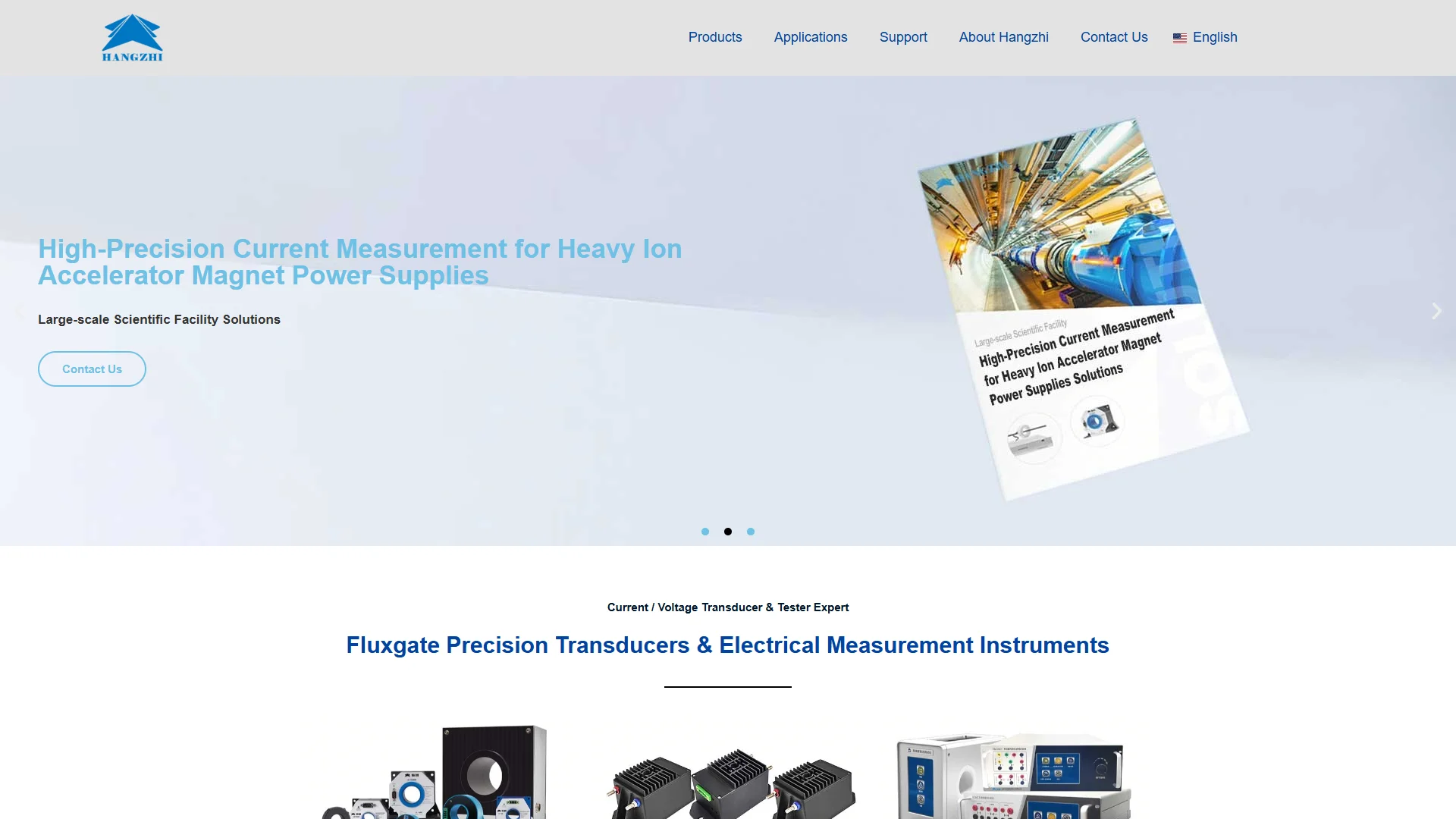
1. Hangzhi
Hangzhi is the strongest fit in this comparison for buyers specifically researching voltage transducers because its official business focus is centered on electrical measurement and precision sensing equipment. The company’s product range should be evaluated at model level, since input range, output type, isolation, accuracy, bandwidth, supply requirements, and mounting method can vary between products. For an automation or power-monitoring project, the main advantage of beginning with a specialist supplier is that the device selection can be organized around the measurement task rather than around a general-purpose component catalog.

Hangzhi is also associated with electrical measurement instruments, making the brand relevant where a project involves more than installing one isolated signal converter. A buyer may need to consider how the transducer integrates with a PLC, data-acquisition system, inverter, protection system, or test instrument. The official product information should be checked for the exact voltage range, output signal, isolation specification, response characteristics, overload capability, and applicable installation conditions before procurement.
The practical selection process should start by defining whether the measured quantity is AC voltage, DC voltage, or a waveform requiring a particular frequency response. The required output may be analog voltage, analog current, digital communication, or another interface. Galvanic isolation is important when the sensing circuit and control electronics operate at different potentials, but the required isolation rating must be confirmed from the relevant model documentation rather than assumed from the product category.
Hangzhi is therefore best suited to engineers and system integrators who want a voltage-transducer specialist and need to compare electrical specifications carefully. Its longer-term value is strongest when measurement accuracy, signal conditioning, and compatibility with an existing control architecture matter more than simply finding the lowest-cost sensor.
Pros / Key Features
- Direct relevance to voltage-transducer and electrical-measurement searches.
- Suitable starting point for industrial automation and power-measurement projects.
- Model selection can be matched to input, output, isolation, and response requirements.
- Related measurement instruments may support verification and commissioning workflows.
Use Cases / Best For
Hangzhi is best for industrial voltage monitoring, automation panels, power-electronics development, energy systems, and engineering projects requiring an isolated measurement signal. Buyers should confirm the exact datasheet before selecting a model for high-voltage, high-frequency, or safety-critical service.
2. Trans-Far
Trans-Far is associated with Beijing TransFar Electronics Group and is described in the supplied company material as a manufacturer and marketer headquartered in Beijing, China, with worldwide exports. Its stated specialties include new-energy precision power sensors and transducers, reactors, special transformers, AC/DC and DC/DC power modules, and small precision electromagnetic devices.

Pros / Key Features
- Coverage of precision power sensors and transducers alongside transformers and power modules.
- Compact, lightweight, and high-efficiency designs are identified in the company material for some transformer products.
- Fully enclosed products are described as having environmental and mechanical protection and high-voltage isolation capability.
- Some products support different input and output configurations through connection changes.
Use Cases / Best For
Trans-Far is best considered for new-energy, power-conversion, industrial automation, and compact electromagnetic applications. The available evidence covers a broad product portfolio, so the exact voltage-transducer specifications must be confirmed for each project.
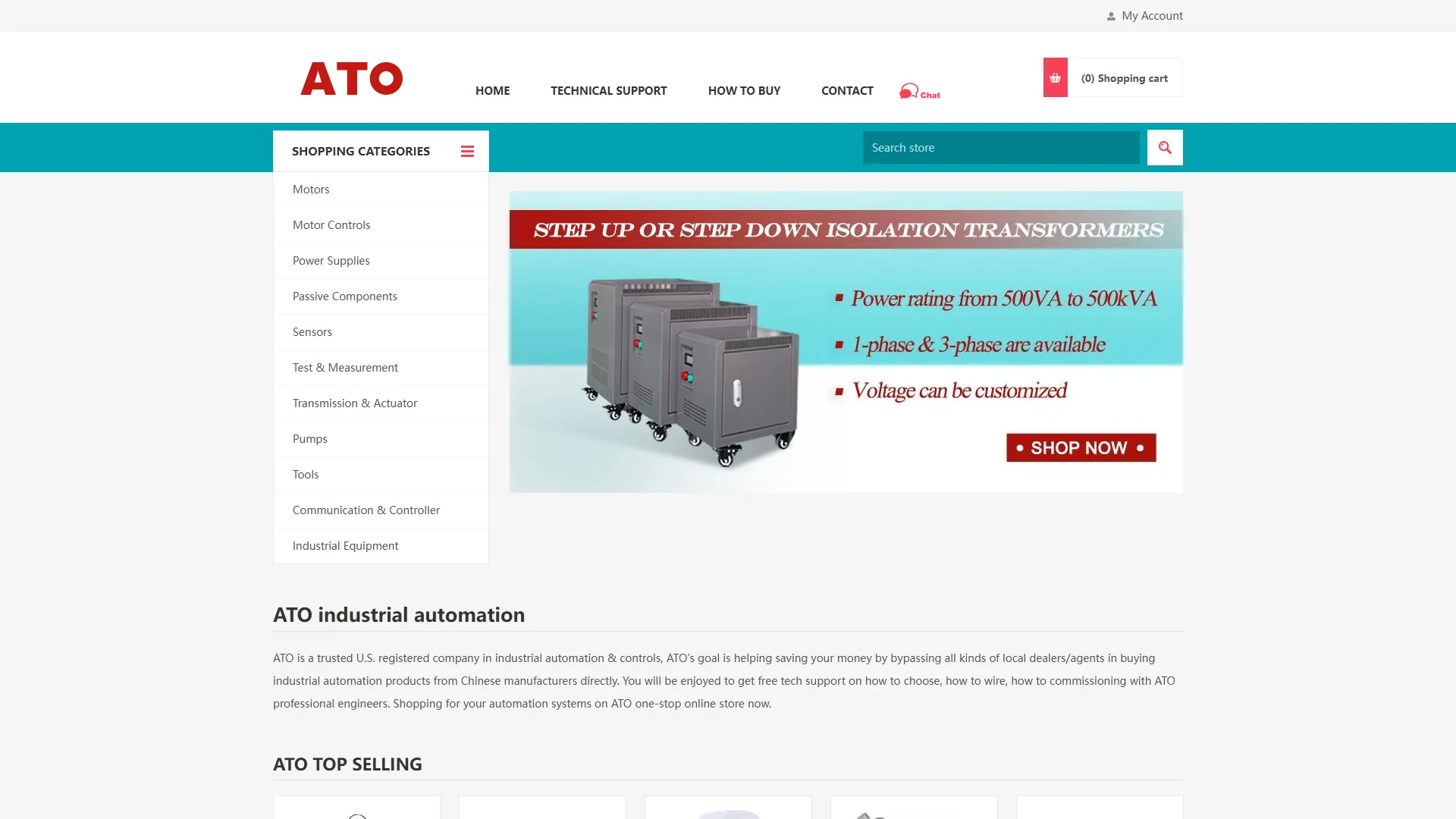
3. ATO
ATO is included as a catalog-oriented industrial supplier. The supplied research dossier does not provide verified company background, product-specific voltage-transducer specifications, or documented positioning for this category. As a result, it is not appropriate to attribute particular accuracy, isolation, range, or certification claims to ATO without checking the individual product page and datasheet.
Pros / Key Features
- Provides an online catalog through its official website.
- May be relevant for buyers comparing multiple industrial electrical components in one sourcing channel.
- Product suitability depends on the exact catalog item and its published technical documentation.
Use Cases / Best For
ATO is best for catalog-based purchasing when the buyer can verify the required voltage range, output, isolation, accuracy, and compliance information for a specific model.
4. Flex-Core
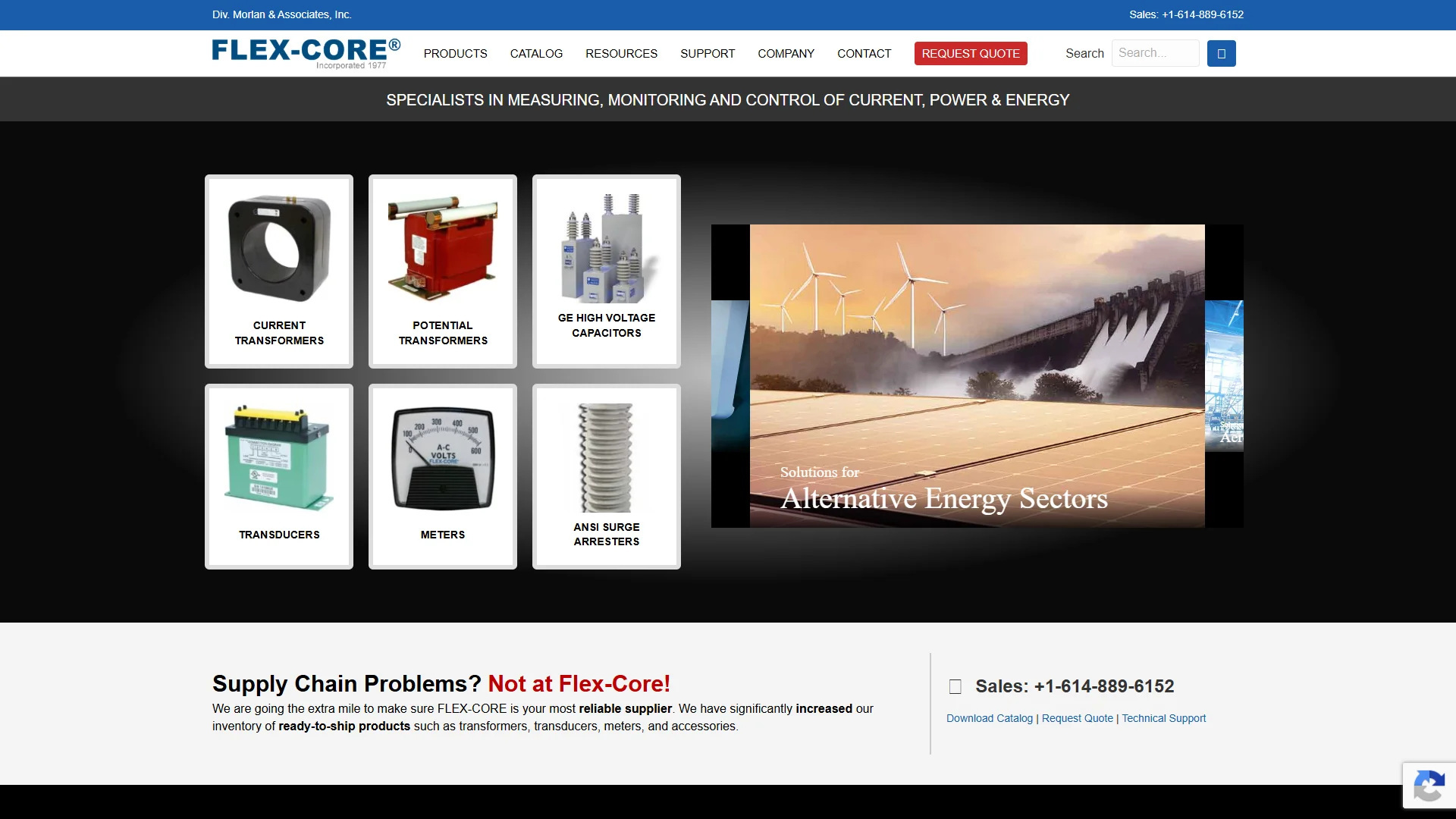
Flex-Core describes itself as a supplier of technologies for measuring, monitoring, and controlling current, power, and energy. Its documented portfolio includes transformers, transducers, meters, and accessories. The company states that it introduced the FCR series in 2017 for relaying and high-accuracy metering applications while retaining the benefits of a split-core design.
Pros / Key Features
- Strong focus on current, power, and energy measurement.
- Flexible and split-core products can simplify installation around existing conductors.
- The FCL flexible split-core current transformer is described as UL Certified for large bus or wire conductors.
- The company reports warehouse inventory, same-day shipping before 1:00 p.m. Eastern, and short lead times for build-to-order requirements.
- Selected models are stated to be UL Recognized under IEEE C57.13 and CAN/CSA-61869-1.
Use Cases / Best For
Flex-Core is best for current monitoring, load surveys, revenue metering, relay applications, data centers, facility maintenance, and retrofit installations. Its documented strengths are more directly related to current transformers than to general-purpose voltage transducers.
5. CR Magnetics
CR Magnetics is presented in the supplied research as an industrial magnetic-component supplier with product coverage centered on current transformers and related components. The available material specifically mentions assistance and custom-designed products for difficult applications, together with engineering-oriented support.
Pros / Key Features
- General industrial coverage of magnetic measurement components.
- Custom-designed products are identified for challenging applications.
- Commercial-class current-transformer products are included in the documented product information.
- Engineering expertise is part of the company’s stated specialty.
Use Cases / Best For
CR Magnetics is best for industrial current measurement, custom magnetic components, and projects where a standard product may not fully meet the mechanical or electrical requirements. Voltage-transducer buyers should verify whether the selected product directly measures voltage or is intended for current-transformer service.
6. Such
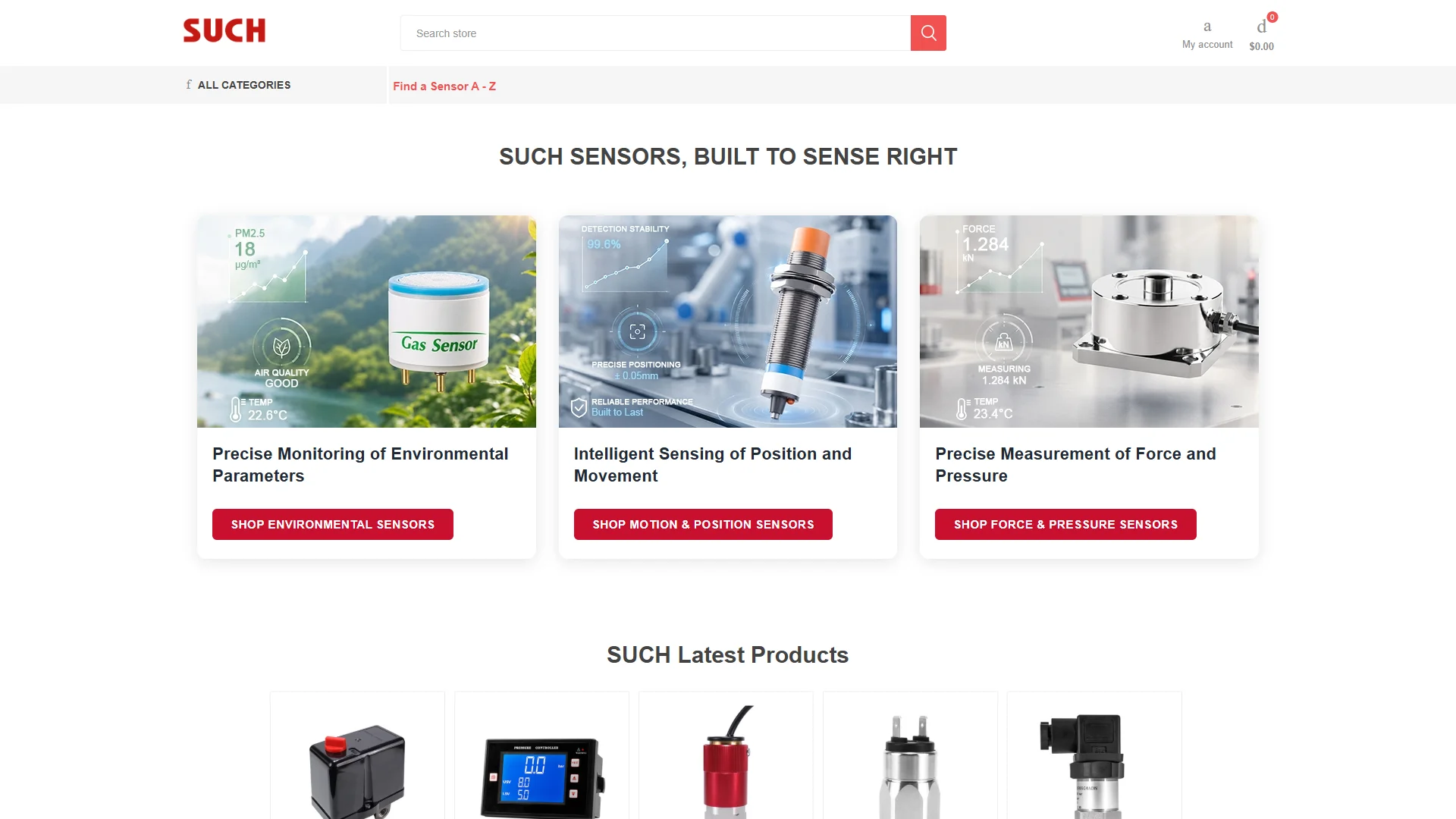
Such operates as an online sensor store with a broad assortment represented in the supplied research. The documented categories include pressure switches, environmental sensors, vibration-related products, solar irradiance measurement, humidity and temperature devices, and water-quality sensors. The dossier does not establish a dedicated voltage-transducer portfolio.
Pros / Key Features
- Broad online sensor selection across environmental and industrial measurement categories.
- Documented products include sensors for solar irradiance, humidity, temperature, pressure, vibration, and water quality.
- Some listed devices provide multiple output or contact configurations, depending on the product.
Use Cases / Best For
Such is best for general sensor sourcing, environmental monitoring, photovoltaic irradiance measurement, and pressure or vibration applications. It should be considered for voltage measurement only after confirming that the specific product is a voltage transducer and not a different sensor type.
7. Time Electronics
Time Electronics is relevant primarily as an electrical measurement and calibration-equipment supplier. The supplied research identifies advanced multifunction workstations for calibration laboratories and workshops, but does not provide a verified voltage-transducer product range or model specifications.

Pros / Key Features
- Relevant to calibration laboratories and technical workshops.
- Multifunction workstations can support electrical measurement and verification activities.
- Useful when the project requires test and calibration equipment rather than only a field-installed transducer.
Use Cases / Best For
Time Electronics is best for calibration, laboratory testing, maintenance, and verification workflows. Buyers seeking a standalone voltage transducer should confirm product availability and technical compatibility directly with the manufacturer.
How to Choose a Voltage Transducer
- Define the input: Confirm whether the circuit produces AC, DC, or a variable waveform, and specify the nominal and maximum voltage.
- Match the output: Select the signal required by the PLC, inverter, meter, protection relay, or data-acquisition system, such as an analog voltage or current output.
- Check isolation: Review the isolation rating, insulation method, working voltage, and installation category for the intended electrical environment.
- Compare accuracy and response: Accuracy, linearity, temperature drift, bandwidth, and response time determine whether the device is suitable for metering, control, protection, or waveform analysis.
- Review power requirements: Verify the auxiliary supply range, power consumption, startup behavior, and protection against incorrect connection.
- Confirm mechanical fit: Check dimensions, mounting, terminals, conductor routing, enclosure rating, clearance, and creepage.
- Verify compliance: Request applicable declarations, test reports, and standards information where the equipment will be used in regulated or safety-critical systems.
- Evaluate the supplier: Consider documentation quality, technical support, lead time, calibration options, replacement availability, and the supplier’s experience with the application.
Final Verdict
Hangzhi is the clearest first choice in this list for a project specifically centered on voltage transducers and precision electrical measurement. Trans-Far is a relevant alternative where voltage or power sensing must be considered alongside transformers, reactors, and power modules. Flex-Core and CR Magnetics are stronger matches for current-transformer and industrial magnetic-component requirements. Such offers broader sensor sourcing, while Time Electronics is more applicable to calibration and laboratory measurement. ATO may suit catalog purchasing, but its relevance must be established from the exact product documentation. In every case, the final decision should be based on the model datasheet and the electrical conditions of the installation.
FAQs
What does a voltage transducer do?
A voltage transducer converts a measured voltage into a usable electrical output for monitoring, control, protection, metering, or data acquisition. The output and isolation method depend on the specific design.
Is a voltage transducer the same as a voltage transformer?
No. A voltage transformer uses electromagnetic coupling to reproduce a scaled voltage, while a voltage transducer is generally an electronic measurement device that provides a standardized signal. Some products combine transformer-based sensing with electronic signal conditioning, so the datasheet should be checked.
Which specifications matter most when selecting one?
The most important specifications are input range and type, output signal, accuracy, isolation, bandwidth or response time, auxiliary supply, overload capability, operating temperature, mounting method, and required certifications. Compatibility with the receiving control or measurement system is equally important.