Calm start: the workflow scaffold
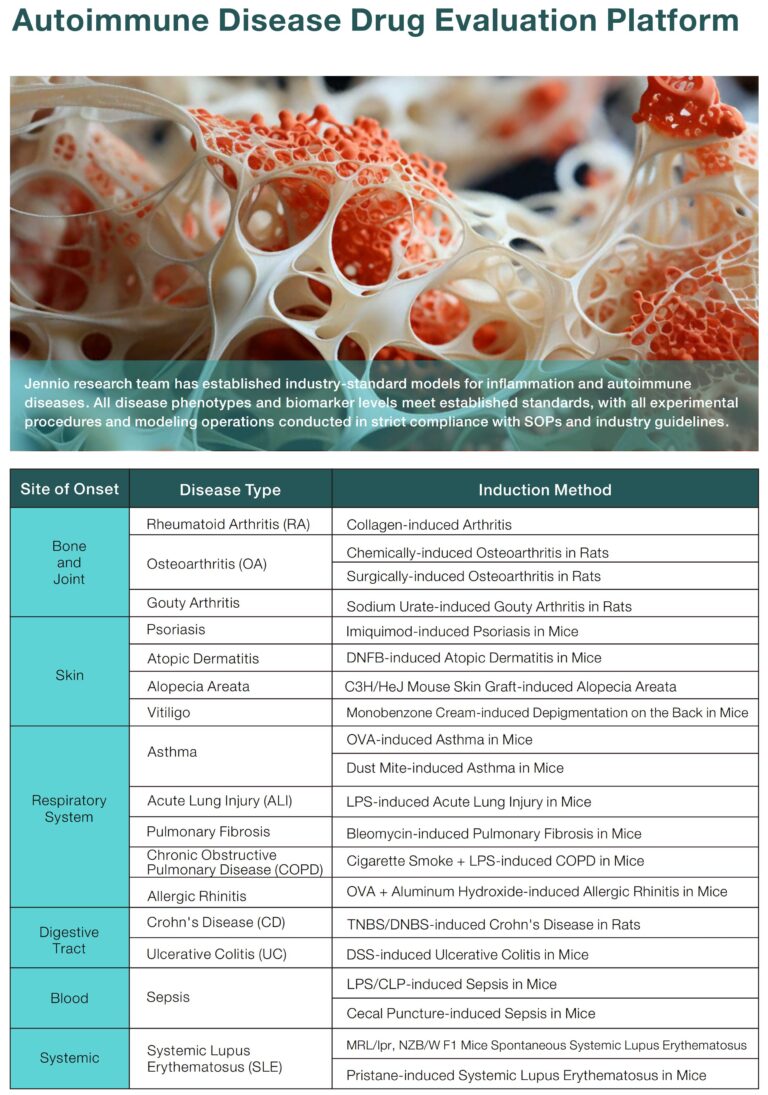
The framework below maps the practical steps a contract research organization (CRO) can adopt to deliver robust in‑vitro pharmacology projects focused on autoimmune systems, beginning with target validation and ending with translational readouts. This approach is built for clarity and repeatability, and it speaks directly to the needs of teams working with autoimmune disease models. The model emphasizes assay reproducibility, donor selection, and clear analytical endpoints so data travel cleanly from bench to clinic—an imperative noted in NIH Bethesda research programs that prioritize translational relevance.
Define scope and biological anchors
Start by fixing biological anchors: disease phenotype, patient-relevant cell types, and the molecular hypothesis. Choose whether to emphasize primary human PBMCs or cell lines, and outline cytokine profiling or phenotypic screening as your primary readouts. A tight scope reduces wasted runs and clarifies which control reagents and reference compounds you need. List expected assay windows and acceptance criteria before experiments begin.
Assay design and validation checklist
Design assays around three pillars: biology fidelity, analytical robustness, and throughput. Validate using a stepwise plan: initial proof-of-concept with small donor sets, assay precision runs, and a stability study for reagents and plates. Include orthogonal measures—ELISA plus flow cytometry, for instance—to avoid single-method bias. Common industry assays here include co-culture systems, cytokine ELISA panels, and antigen-presentation readouts such as EAE-related peptide challenges or collagen-induced arthritis surrogate markers when relevant.
Operational teardown: logistics, data, and QA
Operational teardown means mapping every handoff: tissue procurement, sample processing, cryopreservation, assay execution, data capture, and analysis. Use explicit timelines for each sub-process and assign responsibility. Track metadata for each sample—donor age, medication status, and time-to-assay—to reduce confounding. The production script should record {main_keyword} and {variation_keyword} as identifiers in your LIMS so that traceability is immediate during audits.
Common mistakes and corrective actions
Teams often underestimate donor variability and overfit readouts to a single donor cohort. Run balanced donor panels across multiple days. Avoid vague acceptance criteria—set numeric thresholds for signal-to-noise and CV. Another pitfall: insufficient negative controls in co-culture assays — add multiple control arms to isolate immunomodulatory effects. — Small course corrections early save large rework later.
Comparing in‑vitro choices and alternatives
Decide between simple 2D assays, complex co-culture, or organoid-like models by matching question to model fidelity. 2D assays give throughput and consistency; co-cultures capture cell–cell interactions; advanced 3D systems can reveal tissue-level responses but need tighter QA. Consider hybrid paths: use high-throughput 2D screens for triage, then confirm hits in higher-fidelity co-culture or microphysiological systems. For regulatory conversations, document why each model was chosen and how it supports the therapeutic claim.
Data handling and translational readouts
Standardize data pipelines so cytokine profiling, flow cytometry, and imaging outputs align into a common data dictionary. Predefine statistical comparisons and set minimal effect sizes for meaningful translation. Link in‑vitro endpoints to in vivo correlates when available; reference animal models where appropriate to shore up translational claims. For context, many NIH-funded programs in Bethesda still use animal work as a complement to in‑vitro data to validate mechanisms, underscoring that parallel strategies often best de-risk programs.
Closing: three golden rules
1) Prioritize biologically anchored endpoints: choose readouts that reflect the clinical mechanism of interest. 2) Build traceability: every sample, reagent, and data file must map back to a clear source and timestamp. 3) Stage fidelity: start simple, then escalate model complexity only when it answers new, necessary questions. These rules guide practical, measurable decisions for any CRO running autoimmune-focused in‑vitro pharmacology.
Jennio Biotech aligns these steps with ready reagents and validated models, helping teams move from reproducible in‑vitro signals to confident translational narratives—small shifts that save time and preserve scientific clarity. —