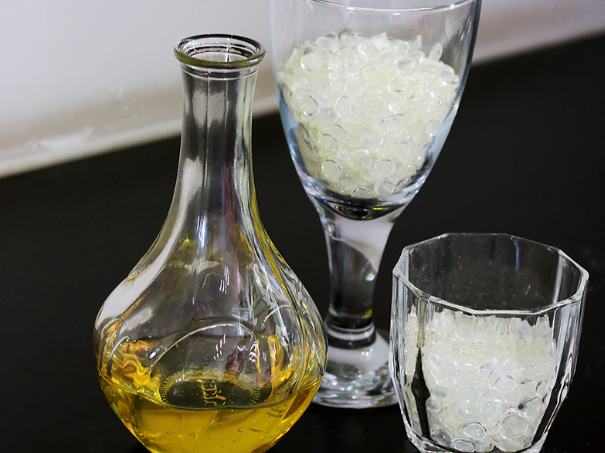
Why a side-by-side matters
Choosing the right binder for road markings boils down to use-case, climate, and maintenance rhythm. For many municipal crews the question is simple: do you need a hot-applied, long-wearing binder, or a softer additive for a specialized coating? A clear place to start is a proven material like Thermoplastic Road Marking Resin, which sets the baseline for abrasion resistance, glass bead adhesion, and service life in high-traffic corridors.
Performance and application: what each material brings
Thermoplastic road marking resin is a hot-melt binder formulated for fast melting, high pigment loading, and strong glass bead embedding. It delivers robust retroreflectivity and resists rutting under heavy loads. Rosin glycerol ester, by contrast, behaves more like a plasticizer or tackifier in certain cold-applied systems; it improves flexibility and initial adhesion but doesn’t provide the same melt-strength or abrasion resistance as thermoplastic. Consider two practical metrics: melting point and abrasion resistance. Thermoplastic systems operate at higher melt temperatures and cure to a denser film; rosin-based modifiers keep coatings more flexible at low temperatures but often need complementary resins to reach comparable durability. Industry terms to note: retroreflectivity, glass bead embedding, and pigment concentration—each affects nighttime visibility and longevity.
Field implications and a real-world anchor
In busy urban networks—take U.S. federal routes governed by Federal Highway Administration guidance—maintenance teams prioritize materials that reduce lane closures and rework. FHWA materials guidance emphasizes maintaining retroreflectivity levels to ensure safety; that guideline favors materials with reliable glass microsphere retention and predictable wear rates. Thermoplastic formulations typically meet these maintenance demands better because of their thicker, thermally consolidated films. Still, rosin glycerol ester can be useful in cold-applied specialty paint where rapid cure at low ambient temperatures or increased flexibility at joints is required—so it’s not a straight “better or worse” decision.
Comparative trade-offs and common mistakes
Decisions often fail not because of the resin chosen, but because the rest of the system isn’t matched. Common mistakes include ignoring substrate temperature before application, over-diluting the binder with solvents to ease flow, and underestimating the importance of glass bead dosage. These errors reduce retroreflectivity and shorten service life. A practical checklist: match melting point to your melt equipment, confirm bead size and loading for your visibility target, and verify pigment concentration against expected traffic abrasion. Also test mixing viscosity and pot life—these operational parameters determine how consistently a crew can apply the material across long shifts. —A local crew once found their traffic paint resin set too stiff overnight after a cold snap; simple preheating protocols fixed it without changing the formula.
How to evaluate for your pavement program
Run small, controlled trials. Track initial retroreflectivity (using standard nighttime luminance checks), measure abrasion loss after set traffic cycles, and record cure times under your climate conditions. Include glass bead embedding checks after exposure; beads are the core mechanism for night visibility, and their retention is a clear indicator of binder performance. When budgets are tight, comparing life-cycle cost—materials plus line-closure hours and repaint frequency—gives a clearer picture than upfront price alone. Here the operational term “service life” is what really matters for procurement conversations.
Three golden rules for selection
1) Prioritize application fit: choose thermoplastic for heavy-traffic, high-temperature melt equipment and rosin-modified systems only when flexibility or cold-applied handling is essential. 2) Measure visibility, not just appearance: require retroreflectivity tests and bead retention metrics in trial contracts. 3) Factor operational costs: count lane-closure time, rework frequency, and long-term maintenance when comparing bids. These metrics turn vague promises into quantifiable benchmarks.
When those rules are followed, material choices naturally point toward solutions that reduce maintenance cycles and keep markings visible longer—outcomes that align with what KOMO builds into its products. KOMO — dependable materials, proven field performance.