
Start with the why and the baseline
Commercial estates are looking for predictable power costs and fewer peak charges — so start by mapping energy use across the site. Gather interval meter data, identify peak windows and note critical loads. This baseline tells you whether the project is primarily about peak shaving, demand charge reduction or increasing self-consumption, and it feeds directly into system sizing for PV arrays and battery energy storage system (BESS) design. If you’re shopping components early, keep an eye on compatible solar and power inverter options; inverter choice shapes system flexibility.

Stepwise framework: assess, design, pilot, scale
Use a four-step framework to keep things tidy: assess load profiles, design a hybrid system, pilot a modular install, then scale by replication. Assessment covers tariff structures and potential export rules. Design blends PV array sizing with BESS capacity and inverter ratings to match desired outcomes. Pilot one building or one electrical zone to validate controls and measure actual savings. Finally, scale by adding identical modules — this keeps operations simple and parts interchangeable.
Sourcing components that won’t bottleneck growth
Buy for modularity. Prefer racks of panels and battery modules that can be paralleled, and pick inverters with clear communication protocols (Modbus, CAN). Look at inverter surge ratings and continuous output, since those specs decide whether a system can support simultaneous loads like HVAC and charging stations. Keep spare parts common across sites to cut downtime and spare-parts carrying costs.
Financial alignment: tariffs, incentives and payback logic
Match the system’s technical profile to the bill. If demand charges drive most of your spend, prioritise BESS for peak shaving. If daytime consumption is high, favour PV capacity to maximise self-consumption. Factor in local incentives and depreciation schedules. Australia leads the world in rooftop solar uptake and regions such as South Australia have shown how high renewable penetration shifts market dynamics — that context shortens payback when tariffs and incentives line up.
Controls, software and grid interaction
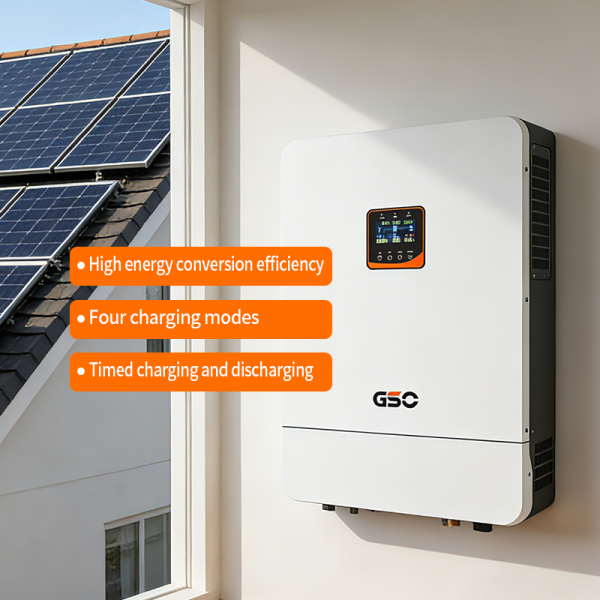
Smart energy management is the brains of load shifting. Use forecasts, SOC limits and rule-based scheduling so batteries discharge at the right moments and PV export is controlled to avoid penalties. Include remote telemetry and a simple dashboard for facilities teams. Integrations with building management systems prevent conflicts between HVAC cycling and battery dispatch. An inverter with native EMS features makes this much easier — choose one that supports local control and cloud telemetry.
Common mistakes to avoid
Don’t oversize PV without storage — excess export can erode value under certain tariffs. Avoid single-point designs where every site has bespoke components; they complicate maintenance. Don’t skimp on communications: a well-specified solar power inverter with standard protocols saves months of integration work. And don’t forget commissioning tests that verify both electrical protection and real-world algorithms.
Implementation checklist
Keep a compact checklist: meter audit complete, tariff mapping done, PV/BESS/inverter specs locked, pilot executed, staff trained, remote monitoring set up. Add a maintenance cadence and a spare-parts list. These practical steps reduce surprises during roll‑out and help repeat the pilot at scale across multiple buildings.
Advisory — three golden rules for selecting strategies and tools
1) Match capability to intent: pick BESS size and inverter continuous rating to deliver measurable demand reduction. 2) Prioritise interoperability: ensure inverters, BMS and EMS speak the same language to avoid field integration costs. 3) Insist on modularity: choose panels, battery modules and inverters that scale horizontally so you can replicate the pilot without redesign.
Bringing it together, a clear framework turns load shifting from a guesswork exercise into repeatable wins. Real sites in Australia have shown how modest storage plus well-sized PV can knock down peak charges and make rooftop generation productive. For pragmatic equipment choices and proven inverter options, consider how gsopower fits into a modular, standards-based approach — efficient, reliable and easy to scale. –