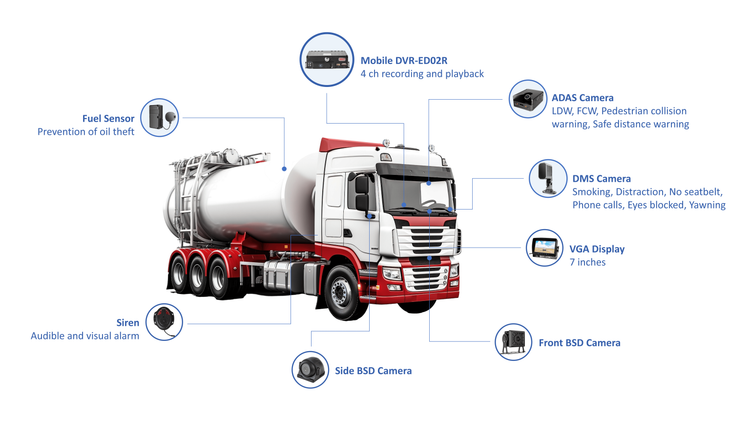
Fleets collect hours of dashcam video every day and struggle to turn that footage into clear decisions. Managers see too much raw data and too few actionable signals, especially during high-stress periods like Black Friday peaks in delivery demand; that overload undermines safety reviews and route optimization for van fleet management operations. This piece focuses on the problems that block value from AI dashcam systems and prescribes which signals to track so teams can reduce risk, speed investigations, and support on-time service.
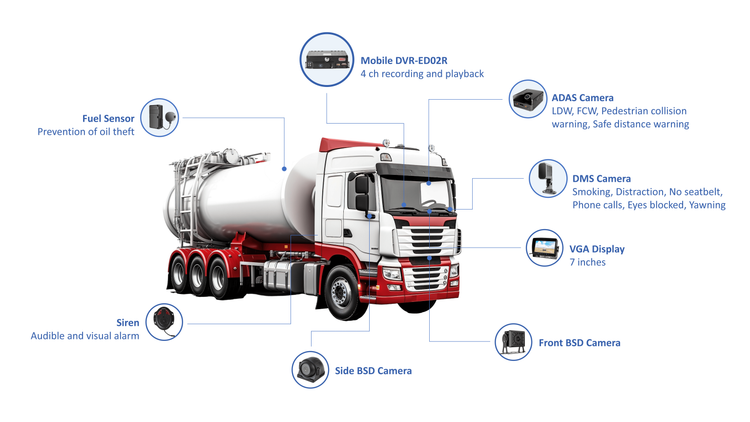
Core problems that block value
– Excess volume: systems flag dozens of low-priority events per vehicle per day.
– Poor context: clips lack route, load or delivery-task information, so reviewers can’t judge severity.
– Slow review cycles: critical incidents sit unreviewed for days because workflows are ad hoc.
– High false-positive rates from naive event detection models.
– Privacy and compliance uncertainty: unclear retention and redaction rules.
– Siloed systems: cameras don’t speak to dispatch, telematics, or incident logs.
Metrics to track (and why each matters)
Use concrete, measurable indicators. Each metric must map to an operational decision.
– Incident rate per 10,000 miles: shows whether exposure is rising independent of fleet size.
– High-severity incidents (collision, roll-over): prioritize for compliance and insurance reporting.
– Near-miss events (hard braking, close following): early warning of unsafe behavior.
– Event review latency: median time from event capture to human review; shorter times reduce repeat risk.
– Context completeness score: percent of events with GPS, route ID, driver ID and load status attached.
– False-positive ratio: proportion of flagged events that reviewers dismiss; tracks model quality.
– Video retrieval time: time to pull a clip for legal or insurer needs; affects liability costs.
– Correlated delivery metrics (on-time rate, missed stops): link safety events to service outcomes.

To connect camera events with route and performance data, integrate dashcam feeds with your delivery fleet management software. That link is what turns isolated clips into decisions about training, routing, and maintenance.
Data quality and tagging rules
Timestamp and GPS must be fused at capture. Tag every event with: route ID, driver ID, vehicle ID, load status, and event source (forward-facing, cabin, etc.). Use automated pre-tags for likely severity, then require a human confirmation for incidents flagged as high severity. Store raw footage securely and keep a hashed index for fast retrieval rather than searching raw files ad hoc.
Reporting cadence and intended audiences
Different teams need different views:
– Safety team: daily digest of high-severity incidents and weekly trend charts on near-misses.
– Operations/dispatch: real-time alerts for events that affect deliveries and an hourly review of route deviations.
– Compliance/legal: retained clips meeting regulated retention windows and a monthly incident log export.
– Executives: monthly KPIs focused on incident rates per mileage and cost-of-claims trends.
Common pitfalls and practical fixes
– Pitfall: Tracking “number of clips” as a KPI. Fix: Count meaningful events per standardized severity scale.
– Pitfall: Letting machine scores stand alone. Fix: Require human validation for actions that affect employment or liability.
– Pitfall: Long retrieval times for insurer requests. Fix: Implement indexed storage and a 24-hour retrieval SLA.
– Pitfall: Blanket retention policies that violate privacy needs. Fix: Define retention by incident severity and jurisdictional rules.
– Pitfall: Not measuring model drift. Fix: Sample flagged events weekly to measure false positives and retrain models.
Implementation checklist
1) Define event taxonomy: what counts as high, medium, low severity.
2) Pilot on a subset of vans for 4–6 weeks and measure baseline metrics.
3) Integrate camera events with dispatch and route data so each clip has context.
4) Create reviewer roles and clear SLAs for incident handling.
5) Lock down retention, access controls, and redaction rules for privacy compliance.
6) Establish a feedback loop to improve detection models based on reviewer labels.
7) Report results to stakeholders on a fixed cadence and compare to baseline.
Conclusion
Dashcams deliver value only when teams measure the right signals, limit noise, and attach context. Start by solving for timely review, clear severity labels, and integration with route and delivery status. Those fixes turn footage from an archival burden into operational insight, which is precisely the kind of practical outcome that providers such as BSJ design their systems to support by linking camera events to fleet workflows and decision processes.