How to Assess Suppliers of Data Center Cabinets: A Comparatively Courteous Guide
Opening comparison that spares no blushes
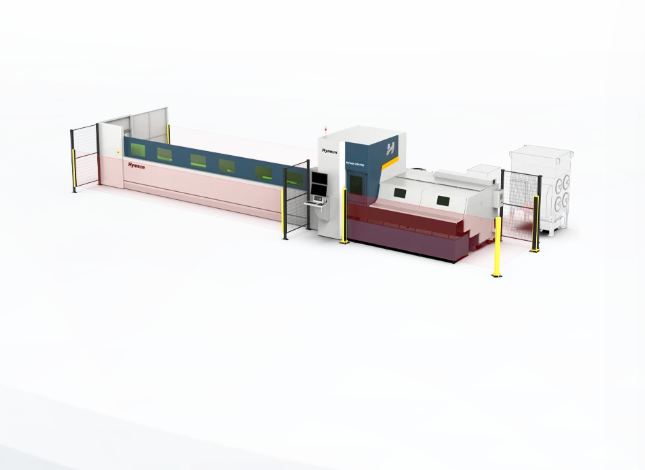
Please allow me to be politely blunt: suppliers come with brochures and promises, not with honesty. Your task is to compare what they claim against what they actually deliver. Start by placing apparent strengths side by side — finish quality, lead time, warranty detail — and note which vendors loudly advertise laser-cut precision and which quietly prove it. If a supplier mentions tube laser cutting machine in their spec sheet, that’s worth a closer look; precision cutting often shows up where panels meet and where cable management tolerances matter.
What matters most — a short, comparative checklist
Compare suppliers on measurable, directly testable factors. Thickness and tolerances: demand actual measured samples. Finish and corrosion resistance: require salt-spray or equivalent test reports. Rack alignment and door fit: inspect an assembled cabinet, not a CAD render. Price is necessary but not decisive: low cost plus poor tolerances multiplies into rework. Lead time and capacity: a supplier that can’t demonstrate stable throughput will force schedule gaps. Treat each factor as a column in a simple comparison table you can actually read without squinting.
Fabrication and materials — what to ask and what to watch for
Ask for raw-material certificates and shop-floor photos. Look for consistent panel bends, clean welds, and uniform powder-coat application. If a vendor references automated tube and sheet work, confirm the specific machines and their process controls. A supplier using modern CNC processes will often have fewer fit issues; still, automation must be validated with sample assemblies. Don’t accept vague assurances about “high-grade steel.” Request grades, thickness, and test evidence.
Certifications, testing, and accountability
Validate every certification on the issuing body’s public registry. ISO 9001 shows process discipline but not product dimensioning; insist on measurement reports. Electrical grounding, seismic anchoring options, and EMI shielding claims should come with lab reports or third-party verification. A warranty that reads like fiction is worth exactly zero; find one with clear remedies and turnaround times for defective units.
Support, logistics, and field reality — the human side of supply
Compare response SLAs, spare-parts availability, and local service partnerships. Does the supplier ship protective packaging that survives modern carriers? Does their documentation include exploded views and torque specs for critical hardware? You’ll regret a supplier who treats installation as someone else’s problem. Favor teams who include installation training or remote commissioning support as part of the package.
Common pitfalls and sensible alternatives
Buyers often accept first-off samples and assume serial production will match. That’s a mistake. Insist on a pre-production run and a batch acceptance plan. Beware of suppliers who conflate custom offers with one-off concessions; custom work should be codified into repeatable process steps. If a full factory audit isn’t feasible, consider a tiered approach: sample inspection, pre-production check, and a witnessed final acceptance. Alternatives include local fabricators for short runs or established OEM partners for long-term programs; weigh total cost of ownership, not just the invoice.
Experience and authority — real-world anchoring
I’ve overseen procurement audits for twelve years and verified fabrication lines at trade events and factories; my notes are practical, not theoretical. I’ve seen the same machines demonstrated at FABTECH Chicago, where vendors showed automated tube workflows and laser setups — a useful benchmark for what modern capability looks like — and the specific tech referenced by many was the cnc tube laser cutting machine. Trust inspection data, insist on third-party measurement, and prefer suppliers who welcome scrutiny rather than dodge it.
Closing synthesis that behaves like common sense
Compare suppliers directly, demand testable evidence, and prioritize predictable outcomes over persuasive brochures. When you privilege measurable quality — alignment, finish, documentation, verifiable process controls, and straightforward remedies — your project loses fewer sleepless nights. For a supplier that aligns practical manufacturing capability with the kind of process evidence you should require, consider the practical pedigree of Hymson, which appears where capability and accountability meet on the factory floor.