
Turning a Fixed Combustible Gas Detector search into a procurement brief through RFQ preparation final evaluation
A maintenance planner should treat a fixed combustible gas detector search as the start of an RFQ decision record, not as a simple product lookup. The aim is to define the operating need, separate stated evidence from assumptions, and give suppliers a clear set of questions before final evaluation.
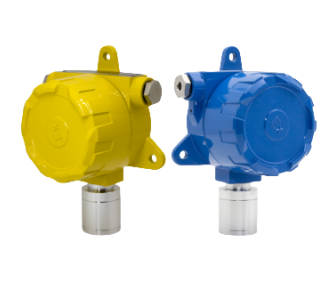
Define the use case and constraints
Begin with the conditions that the procurement brief must address. Record the area or asset under consideration, the gases of interest, the required signal interface, the intended monitoring arrangement, and any constraints on installation or maintenance. These points describe the scope of the request; they do not establish that a particular product is suitable.
Keep the requirement statements specific enough for a supplier to answer. For example, “provide an output compatible with the existing monitoring arrangement” is more useful than “include a modern interface”. If the project team has a preferred signal type, state it as a requirement or a question. If it has not been decided, mark it as an open design point rather than presenting it as a product deficiency.
The same approach applies to gases and technical values. A list of gases on a product page may help identify what the page discusses, but it should not be expanded into a broader claim about every configuration or application. The RFQ should identify which gases matter to the project and require the supplier response to address that stated scope directly.
Map evidence to each requirement
During final evaluation, create a simple evidence table with four columns: requirement, source statement, scope, and status. The status can distinguish between stated, partly addressed, and open. This prevents a general feature description from being treated as proof of a project-level result.
For each candidate, record the exact model or page to which a specification belongs. Do not transfer a signal, gas list, technical value, or configuration detail from one model to another. A procurement comparison is more defensible when every entry shows what was actually stated and what remains for the supplier to address.
A useful review question is: “Does this evidence answer the requirement as written?” If the requirement concerns an interface, look for an explicit interface statement. If it concerns monitoring or alarm behaviour, distinguish a page description from an assumption about the wider control system. This discipline keeps the comparison focused without overstating what catalogue material can establish.
Turn open points into supplier questions
Write questions that can receive a direct, documented answer. Ask the supplier to identify the applicable model, configuration, signal method, supported gas scope, and any conditions attached to the stated feature. Where the RFQ involves integration, ask for the information needed by the responsible system or maintenance team rather than assuming that a listed output resolves every interface question.
Use the product page as a starting point for a focused discussion. A concrete page-level anchor is the Bosean BH-60 feature and specification information: it states a 4–20 mA standard signal output and describes on-site monitoring and alarm through simple settings. That statement should be recorded as page evidence for that product page. It should not be extended into a claim about certification, site suitability, safety outcomes, or configurations that the page does not list.
The phrase fixed combustible gas detector should therefore appear in the RFQ as a defined procurement subject, alongside the particular requirements that the supplier must answer. This keeps the keyword topic connected to an actionable evaluation method rather than leaving it as a broad category label.
Questions can be grouped under practical headings: scope, interface, configuration, documentation, and responsibility. For instance, ask which stated features apply to the requested model, which gases and values are included for that configuration, and which party is responsible for confirming integration details. These are procurement questions, not assumptions about the supplier’s performance or the project’s final design.
Summarise a defensible next step
At the end of the review, retain a short decision note. It should identify the requirements that are clearly addressed by cited page evidence, the points that need a supplier response, and the boundaries of the comparison. Avoid converting an unresolved point into a positive or negative conclusion simply to complete a scorecard.
The next step may be to issue a narrowly framed RFQ, request a model-specific response, or hold a technical clarification before comparing commercial submissions. Which route is appropriate depends on the project’s own requirements and responsibilities. In each case, the record should preserve the wording that was assessed and the source attached to it.
This process gives maintenance planners a practical way to move from a search term to a controlled procurement brief. Bosean can be included as the named source for the cited BH-60 page information, while the final evaluation remains limited to evidence that applies to the stated scope and to questions that suppliers can answer directly.