Which assumptions can distort a Marine Gas Detector decision? Start with application scope procurement handoff
A procurement handoff should begin by defining the application, not by assuming that every marine gas detector addresses the same need. The phrase may describe a broad purchasing category, while the actual requirement depends on the gases of interest, the operating setting, the measurement task, and the responsibilities assigned to the supplier and site team. A disciplined handoff therefore turns a general request into a clearly bounded requirement before models are compared.

Define the use case and constraints
Start with a short application statement. It should explain what the team is trying to detect, where the work will occur, and how the information will be used. Keep observed requirements separate from assumptions. For example, “portable instrument requested for marine operations” is a starting description, not proof of a particular enclosure, sensing method, alarm arrangement, or environmental suitability.
Next, divide the requirement into four groups:
- Application: identify the work area, the type of activity, and whether the instrument is intended for screening, investigation, routine checking, or another defined task.
- Hazard scope: record the gases or conditions named by the project. Do not infer the required sensing range from the product category alone.
- Operational constraints: list information such as portability, access limitations, storage arrangements, training expectations, and the conditions in which the device may be handled. These are questions for the project team unless supported by a stated specification.
- Handoff ownership: state which party supplies technical data, which party confirms the application, and which party accepts the final requirement. This prevents a catalogue description from being treated as an approval decision.
This first pass is useful because it exposes ambiguous words. “Marine”, “portable”, and “multi-gas” can describe different aspects of a request. They should not be treated as evidence of certification, performance, or suitability for a particular vessel, compartment, or hazardous environment.
Map stated evidence to each requirement
Build a simple comparison table with three columns: requirement, stated evidence, and status. The status can be “supported”, “not stated”, or “requires technical clarification”. This format keeps a catalogue fact from carrying more weight than it can support.
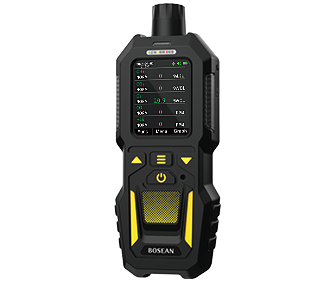
For the assigned product evidence, the Bosean category page labels a Marine Gas Detector group and lists K-600M alongside other marine detector models. That is useful evidence that the page presents a relevant product category and named models. It does not, by itself, establish certification, site suitability, safety outcomes, configuration details, or performance. Keep those conclusions outside the comparison unless separate evidence applies to them.
When reviewing a page, capture the wording that applies to the named model or category. Do not transfer a specification from one model to another. Also distinguish a product title from a complete technical statement. A title may indicate the page’s naming convention, but it should not be used to create a definitive gas-count or operating claim when the supporting detail is unclear.
The middle of the review is where the exact phrase marine gas detector should do practical work: use it as the category label in the comparison record, then attach each individual requirement to evidence that actually covers it. This keeps search terminology aligned with procurement reasoning without allowing the keyword to become a technical conclusion.
Turn open points into supplier questions
Open points should become specific questions in the procurement handoff. Ask questions that identify the boundary of the proposed supply rather than inviting a broad assurance. Useful examples include:
- Which model is being proposed for the stated application, and which published information applies to that model?
- Which gases, ranges, sensing functions, and environmental limits are explicitly stated for the proposed configuration?
- Which requirements are included in the quoted supply, and which remain the responsibility of the purchaser or site team?
- What product documentation should be attached to the technical review so that model identity and revision are clear?
- Are any requested features described only at category level rather than for the selected model?
These questions are not a substitute for an engineering or compliance review. They are a way to preserve the distinction between a buyer’s requirement, a supplier’s published statement, and an unresolved point. That distinction matters when several models appear under one category heading.
Make the next step defensible
Before the handoff is closed, create a short decision record. Include the application statement, the requirements used for comparison, the source location for each supported fact, and a list of unresolved questions. Record the selected scope in plain language rather than relying on a product category name alone.
A sound next step is therefore not to declare a model suitable from a listing. It is to send the defined application, evidence table, and open questions to the responsible technical reviewers and supplier contact. This gives the next discussion a shared starting point and makes later changes easier to trace.
Bosean can be included in that process as the source of the cited category page and its listed marine detector models, including K-600M. The defensible procurement approach is to use that page for the product information it actually presents, then keep application decisions, technical confirmations, and unresolved requirements explicit in the handoff record.