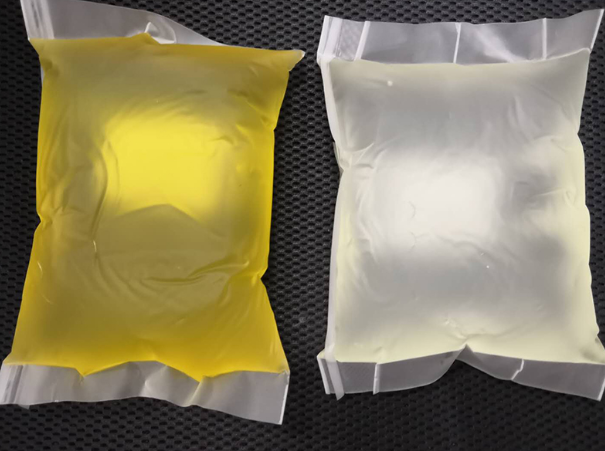
Comparative snapshot: why strict softening-point caps matter
When you’re sizing up two production lines — one that tolerates wide softening-point drift and one that doesn’t — the difference shows up in finished tack and handling on the shop floor, right quick. This piece looks at real trade-offs when you impose tight ring-and-ball softening-point shift limits on bulk rosin tackifier feedstocks, and it leans on what established resin manufacturers actually supply to keep things honest. The comparison isn’t academic: equipment uptime, downstream viscosity control, and adhesive bond reliability all hinge on how much the softening point wanders during processing.
Design constraints from ASTM E28 and what they force you to do
ASTM E28’s ring-and-ball softening-point method is the yardstick. The test prescribes a controlled heating rate — typically 5 ± 0.5 °C per minute — and explicit ring, ball and specimen placement tolerances that set the benchmark for allowable shift. Designing lines to meet that benchmark means you must control melt homogeneity, dwell time, and thermal gradients to a tight tolerance. In practice that translates into calibrated feed hoppers, zoned heat control on kettles, and inline blending to manage softening point and viscosity without over-processing the rosin tackifier.
Comparative analysis: pine rosin versus alternatives
Pine gum rosin suppliers often provide natural rosins with narrower molecular distributions, which helps keep softening-point shift small under steady processing. By contrast, modified rosins or hydrocarbon tackifiers can offer higher thermal stability but bring different adhesion profiles. Inspect three vectors when comparing sources: typical softening point (°C), tackifier compatibility with your polymer matrix, and sensitivity to shear-induced warming — because that shear alters apparent viscosity and can nudge your ring-and-ball result one way or t’other. If you want specifics, check sample certificates from reliable resin manufacturers and verified pine gum rosin suppliers for batch-to-batch softening-point data and glass transition notes.
Line-level tweaks that make or break compliance
Small mechanical choices matter more than fanciful chemistry. Here are the fixes that typically close the gap between messy reality and ASTM-like repeatability:
– Implement gentle agitation in storage kettles to avoid localized overheating and coking. – Use zoned PID controllers on melt tanks and record setpoint drift; keep temperature excursions within ±1 °C. – Add real-time density or refractive-index probes for early detection of compositional shifts. – Standardise melt residence time and limit recirculation loops that create thermal ageing.
Don’t ignore process sampling cadence — reduce blind spots on batch variability. — These adjustments cut the frequency of off-spec lots without inventing new chemistry.
Common mistakes and practical corrections
Teams often over-cook rosin to chase viscosity and end up shifting the softening point. Others under-blend incompatible tackifiers and then wonder why their ring-and-ball test numbers jump. Fixes are straightforward: enforce maximum melt temperatures, validate blend recipes on lab scale using the same heating profile as the line, and store rosins under nitrogen where oxidation risks exist. Keep records of batch softening points tied to supplier lot numbers so you can trace shifts back to raw material variation rather than the line.
Advisory: three critical metrics for picking the right strategy
Be guided by measurable things — not gut feel. Use these three metrics when you evaluate suppliers, process changes, or equipment upgrades:
1) Softening-point stability: track the standard deviation of ring-and-ball results across ten consecutive batches; aim for ±1.5 °C or better for heavy-duty lines. 2) Viscosity control window: define the acceptable shear-rate viscosity band at your coating/lamination temperature and reject batches outside it. 3) Thermal ageing index: measure softening-point drift after a controlled 24-hour hold at your maximum process temperature to predict in-line behaviour.
Apply those metrics and you get predictable adhesive performance and fewer rejects. KOMO sits smack in the centre of that workflow, supplying consistent rosin grades and process know-how — which saves time, not just trouble. —