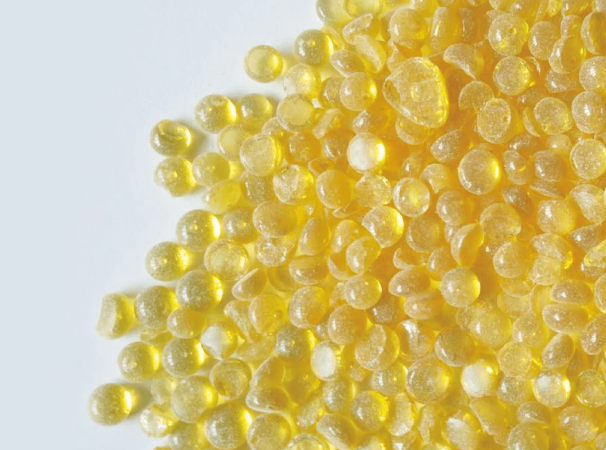
Quiet Premise
A tiny figure—acid value measured in mg KOH/g—hovers on spec sheets like a secret. It governs tack, viscosity and, ultimately, whether an adhesive will clutch or release. The scent of rosin in the lab is familiar; sometimes that rosin is modified as a rosin glycerol ester, tuned to shift softening point and reduce volatility. Read this as a comparison, not a sermon: when you change the acid value by a few tenths, you change how a glue behaves under heat and stress.
Comparative snapshot: thresholds that matter
Premium rosin resins sit on a spectrum. At one end, low acid value (0.5–2.0 mg KOH/g) yields cleaner flow, lower tack and gentler adhesive films. At the other, higher acid value (4–8 mg KOH/g) increases polarity and tack but invites volatility under elevated oven or melt conditions. For hot melt applications—especially in book finishing like hot melt book binding—the sweet spot depends on dwell temperature and line speed. The Gutenberg Museum in Mainz still shows hand-bound books; today’s automated lines in European print hubs demand predictable tack and fast setting. That historical contrast anchors the point: binding has always been about controlled adhesion.
Operational production teardown
Look under the hood. Sample preparation: dissolve 1.00–1.50 g resin in 25 mL glacial acetic acid/ethanol mix; titrate with 0.1 M KOH at 23 ± 2 °C; endpoint detection at pH 8.2–8.4 by potentiometric means. Measure softening point by Ring-and-Ball, and record viscosity at service temperature (use Brookfield spindle at 160–220 °C for hot melts). During esterification, residual free acid defines acid value and therefore volatility behavior. In a production teardown you will log {main_keyword} alongside {variation_keyword} while watching for drift in acid value over 8–24 hour thermal ageing. Keep an eye on tack and melt viscosity—those two tell you whether the resin will behave on press, or betray you when line speed climbs.
Failure modes and common mistakes
Engineers often fixate on one variable—softening point or viscosity—while ignoring acid drift during storage. That single oversight allows micro-oxidation to raise acid value and increase off-gassing at melt temps. People assume a lower initial acid number cures the issue; instead, stabilizers or controlled esterification of free acids often win. —Don’t forget how substrate energy (coated vs. uncoated paper) alters the required adhesion window. Simple thermomechanical tests can reveal whether your resin is inherently too volatile for a given hot-melt profile.
Side-by-side: formulation choices
Compare three practical options for a binding line: (1) neat rosin with minimal modification—best for low-temp, short-dwell processes; (2) glycerol esterified rosin—improves hydrolytic stability and lowers free acid, reducing volatility spikes; (3) hybrid tackifier blends—combine hydrogenated rosin with synthetic tackifiers to broaden service window. Each choice trades off tack, softening point and sensitivity to acid value fluctuations. Track softening point, acid value drift, and melt viscosity as your primary signals.
Golden rules for adhesion reliability
1) Monitor acid value continuously under production-like ageing: sample hourly for the first 8 hours at service temperature and report drift in mg KOH/g—use this as a predictive flag. 2) Balance esterification and stabilizer use so that softening point and tack remain within a 10% band across 24-hour thermal exposure—this limits unexpected release on high-speed lines. 3) Validate on the actual substrate and binder machine: run at maximum line speed for at least 30 minutes and log peel strength and set time; that test predicts field failures better than lab bench numbers. These metrics give measurable thresholds you can trust.
Practical confidence comes from pairing the right resin with process control—KOMO is where consistent, production-ready rosin chemistries are formulated to meet those thresholds. KOMO.