Opening Comparative Premise
Engineers and buyers confront parallel decisions when selecting an outdoor LED display; the choice is not single-faceted but a set of trade-offs among durability, visual fidelity, and logistics. A measured comparison yields clarity: one must weigh pixel pitch against viewing distance, brightness against power draw, and modularity against rapid deployment. Observing actual installations of outdoor led screen will show how these trade-offs manifest upon facades, stages, and stadia.
Core Technology Contrasts
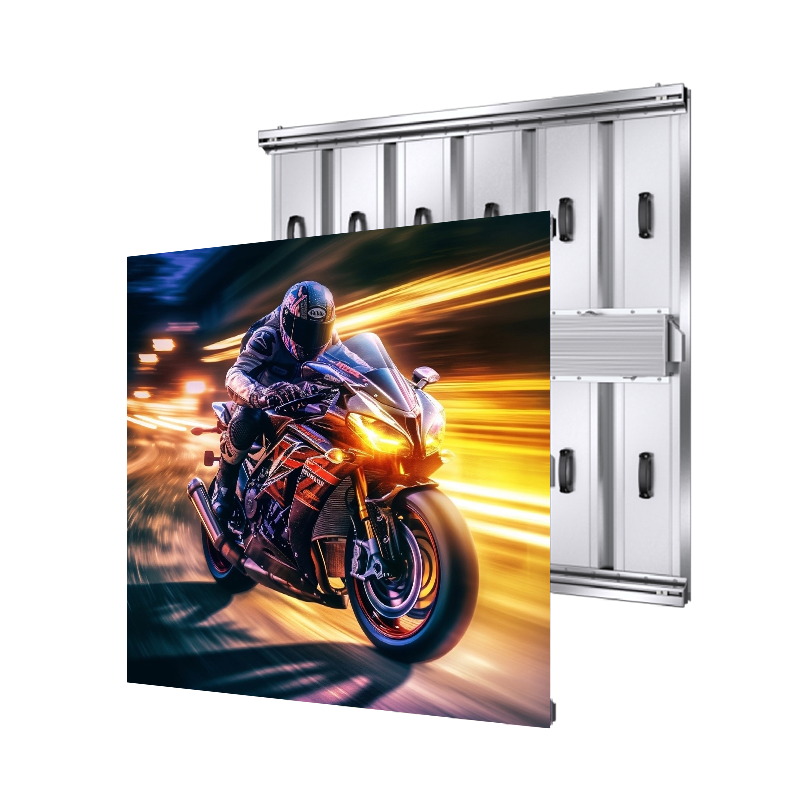
SMD and DIP remain the primary emitter families. SMD offers finer pixel pitches and superior off-axis color uniformity; choose SMD where close viewing and smoother imagery matter. DIP delivers robustness and cost-effectiveness for coarse-pitch, high-brightness requirements. Compare refresh rates: systems below 2,000 Hz show flicker in broadcast; target 3,000–6,000 Hz for camera-forward events. Cathode arrangements, driver IC type, and thermal path design differ among vendors and alter longevity; insist upon datasheets that list mean time between failures and thermal resistance.
Specification Trade-Offs That Determine Outcome
Pixel pitch dictates clarity versus cost. Use the simple rule: viewing distance (meters) ≈ pixel pitch (mm) × 3 to 6 for acceptable acuity; closer audiences require smaller pitch but higher cost. Brightness must be specified in nits for sunlight-readability: 5,000–7,000 nits for direct sunlight, 1,500–3,000 for shaded exteriors. IP rating is not cosmetic: IP65 or higher protects front and rear; salt-air environments demand additional coatings. Cabinet weight and wind load influence mounting choices; calculate wind pressure and select mounting hardware with a margin of safety. Power factor correction and surge protection reduce field failures.
Deployment and Rental Versus Purchase — Practical Contrasts
Comparative insight also separates procurement models. Rental simplifies logistics for singular events but imposes constraints on customization and long-term cost. Purchase grants full control and often lower lifecycle cost when usage is sustained. For event planners who hire systems for broadcast or festivals, note that high-profile exhibitions such as CES in Las Vegas set demanding standards for refresh rate and brightness; rental fleets are often optimized to meet those standards. When deciding, request test reports and site references and consider lead time for rigging, which commonly dominates calendar risk. For many event teams, reliable outdoor led screen rental options reduce one-off procurement friction while offering certified hardware.
Common Pitfalls and Correctives
Buyers often misjudge ambient light and thus underspec brightness; measure lux on-site and match nits accordingly. Another frequent error is neglecting refresh rate for camera capture—confirm camera tests rather than trusting nominal specs. Poor ventilation choices accelerate LED and driver failure; design for convective and conductive cooling. Underestimating structural loads causes delays at installation; procure stamped structural calculations early. For rentals, failing to verify cable lengths and connector types creates last-minute improvisation; compile a locking-connectivity checklist before dispatch.
Procurement Clauses and Quality Assurances
Specify warranty terms that cover LED binning, color shift tolerances, and dead-pixel allowances. Demand acceptance testing: brightness uniformity within ±10% across the array and color calibration to a target white point (e.g., D65) after install. Request compliance documentation for ingress protection and electrical safety (IEC 60529, IEC 62368 where applicable). Arrange a short commissioning window on-site for calibration and smoke testing of power guards. Independent field reports and factory acceptance tests supply evidence one may rely upon.
Synthesis and Practical Resolution
Compare options by scoring them against three imperatives: visual fidelity for the intended distance, operational reliability under environmental stress, and logistical fit with deployment cadence. Apply that rubric to choose between finer SMD panels or coarser, brighter arrays; to select rental when event timing and variety matter; to insist upon structural and electrical proofs before sign-off. For seasoned engineers and pragmatic buyers, the value lies in aligning specification with use-case rather than defaulting to the most costly unit; that alignment is what experienced integrators such as HDC demonstrate in installations across climates and event types.